

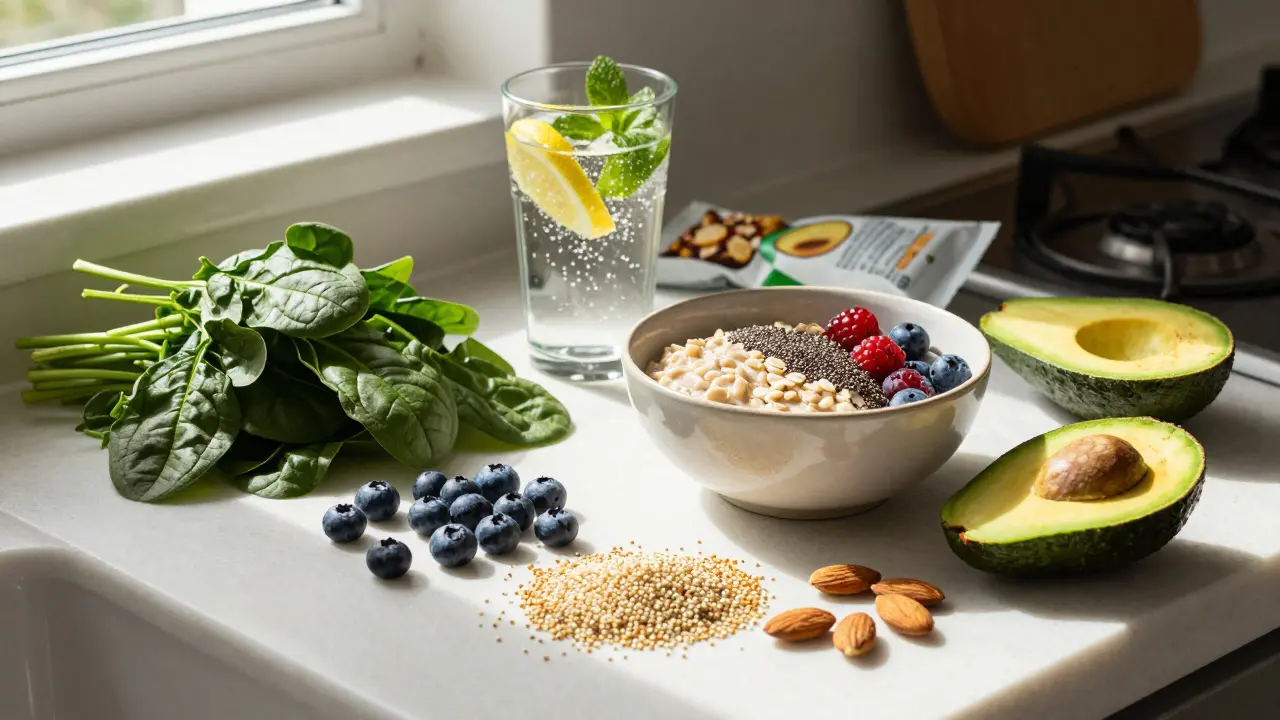
What if the key to feeling better, sleeping deeper, and having more energy wasn’t a new supplement, a fancy app, or a 6 a.m. workout-but just what’s on your plate? The truth is, most of the health problems we deal with today-fatigue, brain fog, digestive issues, high blood pressure, even anxiety-are tied directly to what we eat. Not because we’re weak-willed, but because our food system has changed faster than our bodies can adapt.
What a Healthy Diet Actually Means
A healthy diet isn’t about counting calories, cutting out carbs, or buying expensive superfoods. It’s simple: eat real food, mostly plants, and leave the rest behind. That means vegetables, fruits, whole grains, legumes, nuts, seeds, and lean proteins like fish, eggs, or tofu. It’s food that looks like it came from the ground, not a factory.
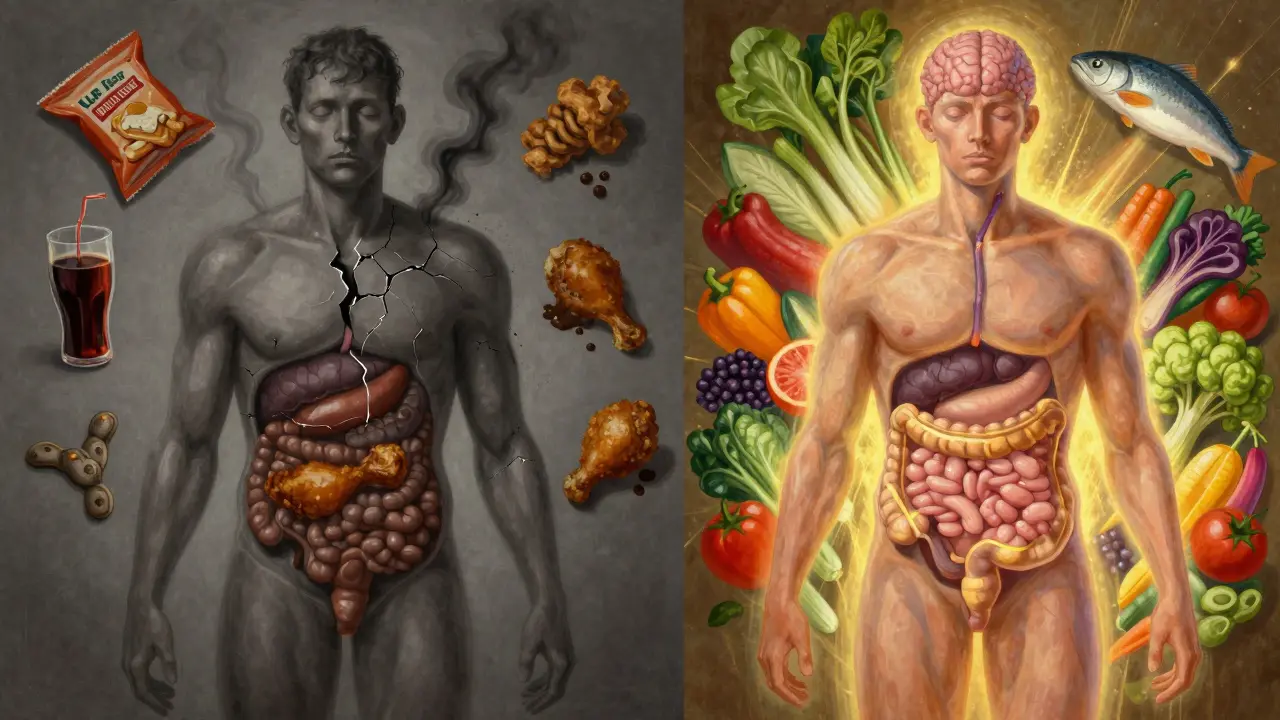
Compare that to the average Western diet: packaged snacks, sugary drinks, white bread, fried chicken, and processed meats. These aren’t just empty calories-they’re actively harmful. A 2023 study from the University of Auckland tracked over 12,000 adults and found that people who ate more ultra-processed foods had a 42% higher risk of developing type 2 diabetes over five years-even when they exercised regularly.
Real food doesn’t need a nutrition label. If it has more than five ingredients you can’t pronounce, it’s probably not helping you.
How Processed Food Breaks Your Body
Processed foods are designed to be addictive. They’re loaded with sugar, salt, and unhealthy fats because those ingredients trigger dopamine hits in your brain-just like drugs. Your body didn’t evolve to handle this kind of constant bombardment.
When you eat refined carbs like white bread or pastries, your blood sugar spikes and crashes. That’s why you feel tired an hour after lunch, then crave more sugar by 3 p.m. Over time, this cycle leads to insulin resistance, weight gain, and inflammation-the root cause of most chronic diseases.
And it’s not just sugar. Additives like emulsifiers and artificial sweeteners are messing with your gut microbiome. A 2024 meta-analysis in Nature Food showed that people who regularly consumed artificial sweeteners had a 20% higher risk of developing metabolic syndrome. Your gut bacteria, which control everything from your immune system to your mood, are starving or being poisoned by the stuff we call food.
Real Food Heals from the Inside Out
Switching to whole foods doesn’t just stop damage-it reverses it. People who replace processed foods with vegetables, beans, lentils, and whole grains often see dramatic improvements in just weeks.
Take inflammation, for example. Chronic inflammation is behind arthritis, heart disease, depression, and even Alzheimer’s. Foods like spinach, blueberries, walnuts, and fatty fish (like salmon or mackerel) are packed with antioxidants and omega-3s that lower inflammation markers. One 2022 trial in New Zealand found that participants who followed a whole-food, plant-focused diet for 12 weeks dropped their CRP (a key inflammation marker) by an average of 37%.
And it’s not just physical. A 2023 study from Massey University showed that people who ate more fruits, vegetables, and whole grains reported better sleep, lower stress, and improved focus within four weeks. Your brain runs on nutrients-omega-3s, B vitamins, magnesium, zinc. Without them, your mood and mental clarity suffer.
What a Healthy Diet Looks Like in Practice
You don’t need to go vegan or keto. Just start by making small, sustainable swaps:
- Replace sugary cereal with oatmeal topped with berries and chia seeds.
- Swap soda for sparkling water with lemon and mint.
- Choose brown rice or quinoa instead of white rice.
- Snack on almonds or an apple instead of chips.
- Cook at home more-even one extra meal a week makes a difference.
Meal prep doesn’t have to be time-consuming. Roast a big tray of vegetables on Sunday. Cook a pot of lentils. Keep hard-boiled eggs in the fridge. When you’re hungry, grab what’s already ready.
And don’t stress about perfection. If you eat a slice of cake at a birthday party, that’s fine. The goal isn’t purity-it’s consistency. Most people who stick with a healthy diet do so because they feel better, not because they’re following a strict rulebook.
Why This Isn’t a Trend-It’s a Survival Strategy
Chronic disease is skyrocketing. In New Zealand, 1 in 3 adults has high blood pressure. 1 in 4 has prediabetes. Obesity rates have doubled since 2000. These aren’t just statistics-they’re people in your family, your workplace, your community.
The medical system treats symptoms with pills, but the root cause is often diet. Medication can manage high cholesterol, but it won’t fix the inflammation caused by processed food. It won’t restore your gut lining or reset your insulin sensitivity.
A healthy diet isn’t optional. It’s the most powerful, affordable, and accessible tool we have to take back control of our health. You don’t need a doctor’s prescription. You don’t need to wait for a breakthrough. You just need to change what’s on your plate.
Common Misconceptions
Let’s clear up a few myths:
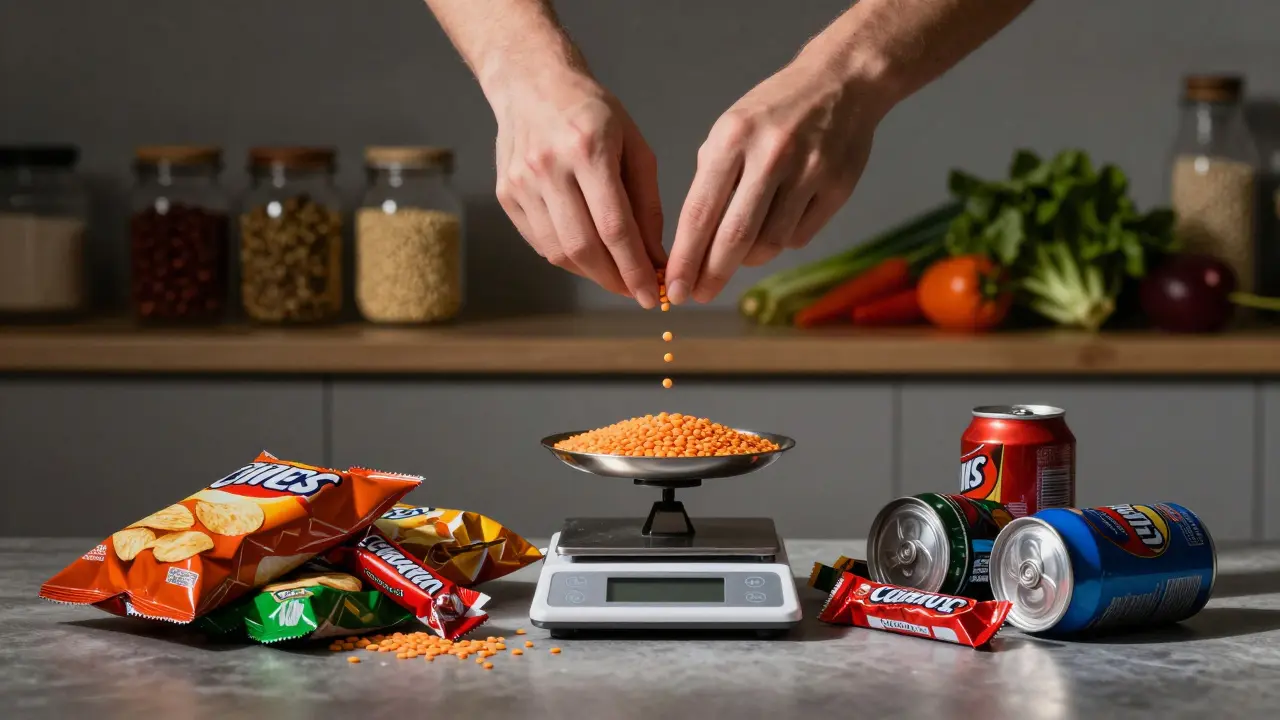
- "Healthy food is expensive." Beans, rice, oats, seasonal veggies, and eggs cost far less than frozen meals, snacks, and soda. A bag of dried lentils feeds four people for under $3.
- "I don’t have time to cook." You don’t need to make gourmet meals. A 10-minute stir-fry with frozen veggies and canned beans is faster than ordering takeout.
- "I need protein shakes and supplements." You can get all the protein you need from lentils, tofu, eggs, fish, or chicken. Supplements are for fixing deficiencies-not replacing real food.
- "It’s too hard to change." You don’t have to overhaul your whole life overnight. Start with one meal. Then another. Momentum builds faster than you think.
What Happens When You Stick With It
People who stick with a whole-food, minimally processed diet for six months or more report the same patterns:
- More stable energy-no more afternoon crashes.
- Better digestion-less bloating, less constipation.
- Clearer skin and stronger hair.
- Improved sleep quality.
- Reduced brain fog and better focus.
- Weight loss without counting calories.
One woman in Wellington, 52, started eating this way after her doctor warned her about prediabetes. Within three months, her blood sugar returned to normal. She stopped taking metformin. She says, "I didn’t feel like I was dieting. I just started eating food that made me feel good. And I haven’t looked back."
Can a healthy diet reverse chronic diseases?
Yes, in many cases. Studies show that type 2 diabetes, high blood pressure, and even early-stage heart disease can improve or reverse with a whole-food, plant-rich diet. A 2021 trial published in the Journal of the American College of Cardiology found that 78% of participants with type 2 diabetes reduced or eliminated their medication after one year of dietary changes. It’s not magic-it’s biology. Your body heals when you stop feeding it toxins and start giving it real nutrients.
Do I need to go vegan or keto to eat healthy?
No. Both diets can be healthy if done right, but they’re not required. The core of a healthy diet is whole, unprocessed foods-whether you eat eggs, fish, beans, or tofu. Vegans and keto dieters often succeed because they cut out processed foods, not because of the diet label itself. Focus on what you add, not what you remove.
Is organic food necessary for a healthy diet?
Not for most people. While organic produce has fewer pesticides, the biggest benefit comes from eating more vegetables and fruits-organic or not. If budget is tight, prioritize the "Dirty Dozen" (strawberries, spinach, apples) for organic, and save money on the "Clean Fifteen" (avocados, sweet corn, onions). But don’t skip the veggies because you can’t afford organic.
How long until I feel the difference?
Many people notice changes within 7-14 days: less bloating, better sleep, more energy. For deeper changes-like lower blood pressure or improved blood sugar-it can take 6-12 weeks. The key is consistency. Don’t wait for a miracle. Look for small wins every day.
What if I have food allergies or intolerances?
A healthy diet still applies. If you’re gluten intolerant, choose gluten-free whole grains like quinoa or buckwheat. If you’re dairy-sensitive, swap milk for unsweetened almond or oat milk. The goal isn’t to eliminate entire food groups-it’s to replace processed options with real, whole alternatives that work for your body.
Where to Start Today
Don’t wait for Monday. Start right now:
- Look in your pantry. Throw out anything with more than five ingredients or high-fructose corn syrup.
- Buy one bag of oats, one bag of lentils, and three kinds of seasonal vegetables.
- Drink water instead of soda or juice for the next 24 hours.
- Make one meal from scratch tonight-no takeout.
- Repeat tomorrow.
Health isn’t built in gyms or clinics. It’s built in kitchens, one meal at a time. Your body doesn’t need a miracle. It just needs real food.