

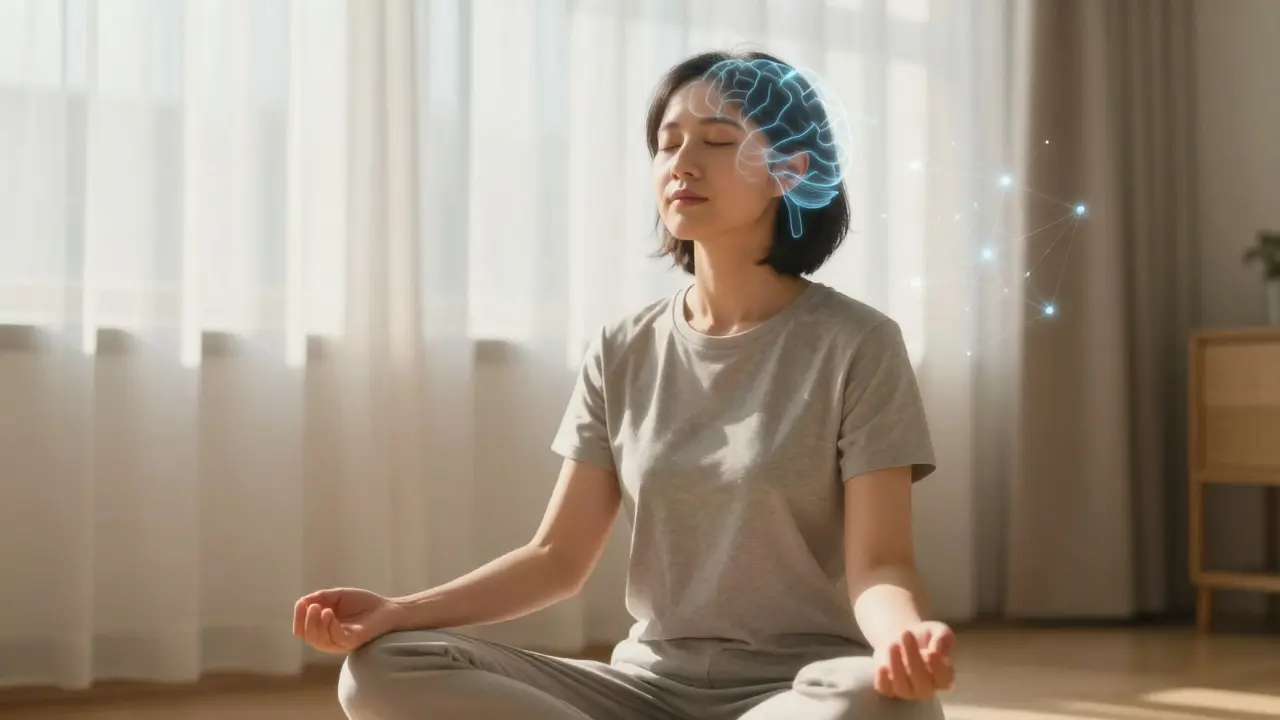
Ever feel like your mind is stuck in overdrive? You’re not alone. Most people live with a brain that’s wired for danger, not peace. Even when there’s no threat, your nervous system keeps humming like a car engine idling at 5,000 RPM. The good news? You can rewire it. Not with pills, not with expensive retreats-just with consistent, science-backed habits that slowly shift your brain’s default setting from panic to peace.
Your Brain Wasn’t Built for Modern Life
Your brain evolved over 200,000 years to help you survive lions, not deadlines. The amygdala-the part that sounds the alarm-is lightning-fast. It doesn’t care if the threat is a looming work email or a loud neighbor. It just reacts. And in today’s world, it’s constantly being triggered. The result? Chronic low-grade stress that wears you down without you even realizing it.
Studies from the University of California show that people who report high stress levels have thicker amygdalae and weaker connections to the prefrontal cortex-the area responsible for rational thinking and emotional regulation. That’s not a coincidence. It’s a feedback loop: stress makes you more reactive, and being more reactive makes you more stressed.
Calmness Is a Skill, Not a Trait
People who seem naturally calm aren’t born that way. They’ve trained their brains. It’s not about being emotionless. It’s about creating space between stimulus and response. That space is where calm lives. And you can grow it.
Neuroplasticity-the brain’s ability to reorganize itself-is real. It doesn’t stop at age 25. It doesn’t require years of meditation. It just requires repetition. Every time you choose to breathe deeply instead of snapping, or pause before replying to a stressful text, you’re strengthening neural pathways for calm. Over time, those pathways become the default.
Four Science-Backed Ways to Rewire Your Brain
Here’s what actually works, based on research from Harvard Medical School, the Mayo Clinic, and the Mind & Life Institute.
- Box Breathing - Inhale for 4 seconds, hold for 4, exhale for 4, hold for 4. Repeat 5 times. This activates the vagus nerve, which tells your body to shut down the stress response. Do this before meetings, after arguments, or when you wake up anxious. Within a week, you’ll notice your heart rate drops faster after stress.
- Label Your Emotions - When you feel overwhelmed, say out loud: “I’m feeling anxious,” or “This is frustration.” Just naming the emotion reduces activity in the amygdala by up to 50%, according to UCLA neuroscience research. It’s not magic-it’s mapping. Your brain can’t panic when it knows what it’s panicking about.
- One-Minute Body Scans - Sit still. Close your eyes. Start at your toes. Notice any tension. Don’t try to fix it. Just observe. Move slowly up your body-feet, calves, thighs, stomach, chest, shoulders, face. Do this once a day. After 10 days, you’ll catch tension earlier. You’ll notice your jaw clenching before it becomes a headache. That’s rewiring.
- Interrupt the Scroll - Social media isn’t just distracting-it’s rewiring your brain for constant novelty. Each swipe triggers dopamine, keeping your brain in alert mode. Try this: every time you pick up your phone, ask, “Am I looking for something, or just escaping?” Replace 15 minutes of scrolling with walking outside. No headphones. Just listen. Your brain will thank you.
What Doesn’t Work (And Why)
Many people try to “think their way” into calm. They meditate for five minutes and get frustrated when they still feel anxious. Or they buy apps promising instant peace. That’s like trying to build muscle by lifting a feather once a week.
Calm isn’t achieved by avoiding stress. It’s built by facing it-differently. You don’t need to eliminate triggers. You need to change your relationship with them.
Also, don’t wait for the perfect moment. You won’t find it. Calm isn’t found on a beach in Bali. It’s built in the messy middle of your life-while your kid is screaming, your boss is emailing, and your coffee is cold.
Small Shifts, Big Results
One woman I know, a nurse in Brisbane, started doing box breathing between patient shifts. At first, she did it in the bathroom, eyes closed, counting silently. After three weeks, she noticed she wasn’t snapping at coworkers. After two months, she stopped having panic attacks before night shifts. She didn’t quit her job. She didn’t take time off. She just changed how she responded.
Another man, a software developer, started labeling his emotions when he hit a bug. Instead of yelling at his screen, he’d say, “This is frustration.” He started noticing patterns. He realized most of his anger came from fear of failure. That awareness alone cut his stress levels in half.
These aren’t miracles. They’re neural habits. You’re not fixing your brain. You’re training it.
How to Know You’re Making Progress
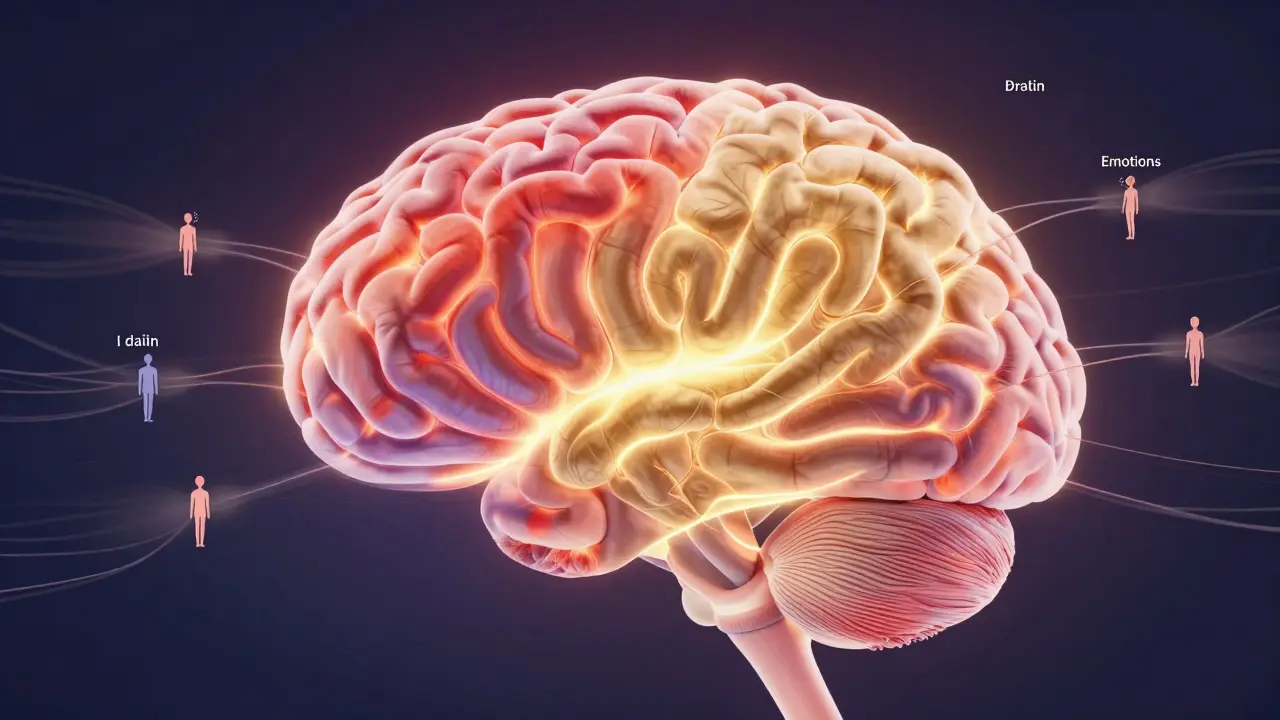
You won’t wake up one day feeling perfectly calm. That’s not the goal. Look for these signs instead:
- You pause before reacting to bad news.
- You catch yourself tensing up and breathe before you even think about it.
- You feel less need to explain or justify your emotions.
- You recover faster after a stressful event.
- You notice quiet moments-like the sound of rain-and don’t feel the urge to fill them with noise.
These are the markers of a rewired brain. They’re subtle. But they’re real.
What Happens When You Keep Going
After six months of consistent practice, your brain doesn’t just handle stress better-it starts seeking calm. You’ll find yourself choosing silence over noise, walks over screens, deep breaths over caffeine. You won’t be perfect. You’ll still get angry. You’ll still feel anxious. But you’ll know it’s temporary. You’ll know it’s not your whole story.
Your brain will start to expect peace. And when it expects peace, it begins to create it.
Start Today. Not Tomorrow.
You don’t need a retreat. You don’t need a guru. You just need to pick one thing from above and do it for seven days. Box breathing. Labeling. A body scan. One minute. That’s it.
Do it at the same time, every day. Morning. Before bed. After lunch. Doesn’t matter. Consistency is the key. Your brain doesn’t care about intensity. It cares about repetition.
After seven days, you’ll feel something shift. Maybe it’s small. Maybe you just notice your shoulders are lower. That’s enough. That’s the beginning.
Your brain is listening. Start speaking calm.
Can you really rewire your brain for calmness?
Yes. Neuroplasticity means your brain can change its structure and function based on repeated experiences. Studies using fMRI scans show that people who practice mindfulness or breathing techniques regularly develop thicker prefrontal cortexes and reduced amygdala reactivity. Calmness isn’t a personality trait-it’s a learned skill.
How long does it take to rewire your brain?
You’ll notice small changes in as little as 7 days with daily practice. Meaningful shifts-like reacting slower to stress or recovering faster-typically show up after 4 to 6 weeks. Long-term rewiring, where calm becomes your default state, takes 6 to 12 months of consistent effort. It’s not fast, but it’s permanent.
Do I need to meditate to rewire my brain?
No. Meditation helps, but it’s not required. Simple practices like box breathing, labeling emotions, or doing a one-minute body scan are just as effective-and easier to stick with. The goal isn’t to sit still for 20 minutes. It’s to interrupt stress patterns in real time.
What if I forget to practice?
Forgetfulness is normal. Don’t punish yourself. Just restart. One practice done once is better than one done perfectly five times and then abandoned. Tie your practice to something you already do-like brushing your teeth, waiting for your coffee, or sitting in traffic. That way, it becomes part of your routine, not another task.
Can children or older adults rewire their brains too?
Yes. Neuroplasticity works at every age. Children benefit from simple breathing games. Older adults who practice body scans report better sleep and less anxiety. The methods may need to be adjusted, but the principle is the same: repetition builds new neural pathways, no matter your age.
Is calmness the same as being numb or detached?
No. Calmness is not emotional suppression. It’s emotional clarity. You still feel anger, sadness, joy-you just don’t get hijacked by them. People who are truly calm are often more empathetic, not less. They respond thoughtfully instead of reacting impulsively.