
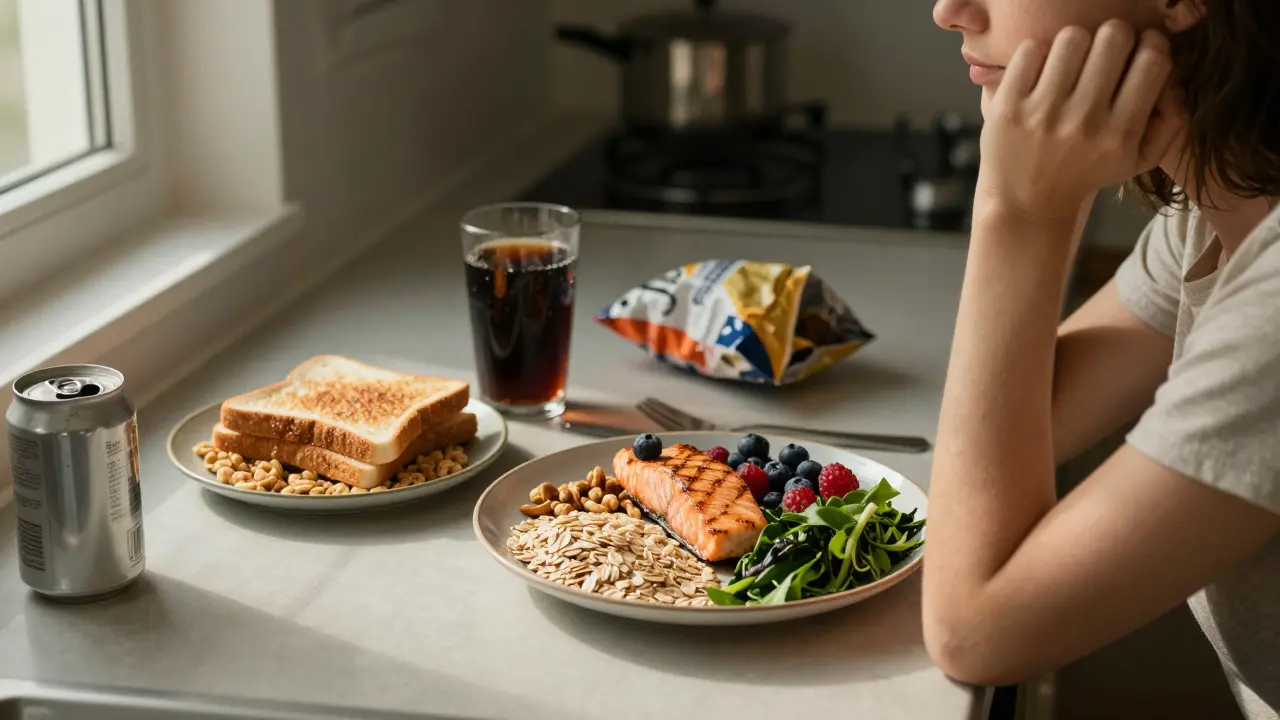
When you feel low, anxious, or overwhelmed, it’s easy to blame stress, sleep, or life circumstances. But what if your plate is part of the problem? What you eat doesn’t just fuel your body-it directly shapes your brain chemistry, your mood, and how you handle daily stress. The link between diet and mental health isn’t just theoretical. It’s backed by real studies showing that people who eat whole, unprocessed foods have significantly lower rates of depression and anxiety than those who rely on packaged snacks, sugary drinks, and fast food.
What Happens in Your Brain When You Eat Poorly
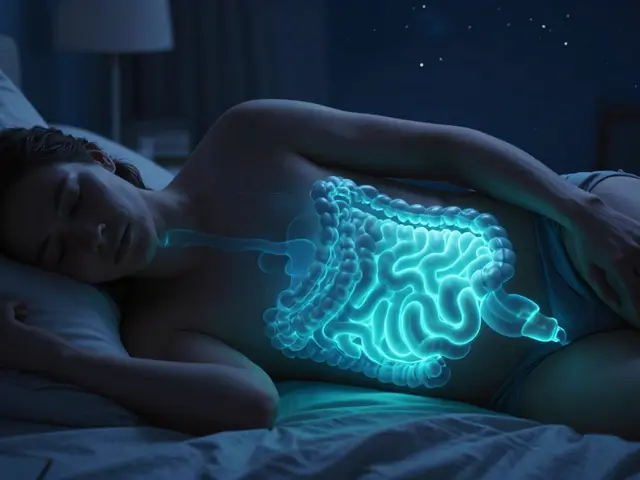
Your gut and brain are wired together through the vagus nerve-a direct communication line that sends signals back and forth. About 90% of the serotonin your body produces-the chemical that helps you feel calm and happy-is made in your gut. But it doesn’t just appear out of nowhere. It needs the right building blocks: tryptophan from turkey, eggs, and nuts; vitamin B6 from bananas and chickpeas; and magnesium from spinach and pumpkin seeds.
When you eat a lot of refined sugar, your blood sugar spikes and crashes. That rollercoaster doesn’t just leave you tired-it triggers inflammation in your brain. Chronic inflammation is one of the strongest biological links to depression. A 2023 study from the University of Melbourne tracked over 1,200 adults and found that those who consumed more than 100 grams of added sugar daily were 25% more likely to develop depression over five years than those who kept it under 25 grams.
Processed foods also lack fiber, which your gut bacteria need to thrive. These bacteria don’t just digest food-they produce short-chain fatty acids that reduce brain inflammation and help regulate stress hormones like cortisol. No fiber? No good bacteria. No good bacteria? Higher anxiety and worse mood swings.
The Foods That Help Your Mind
It’s not just about avoiding bad stuff-it’s about adding the right things. People who eat more of these foods report better mental clarity, less irritability, and improved sleep:
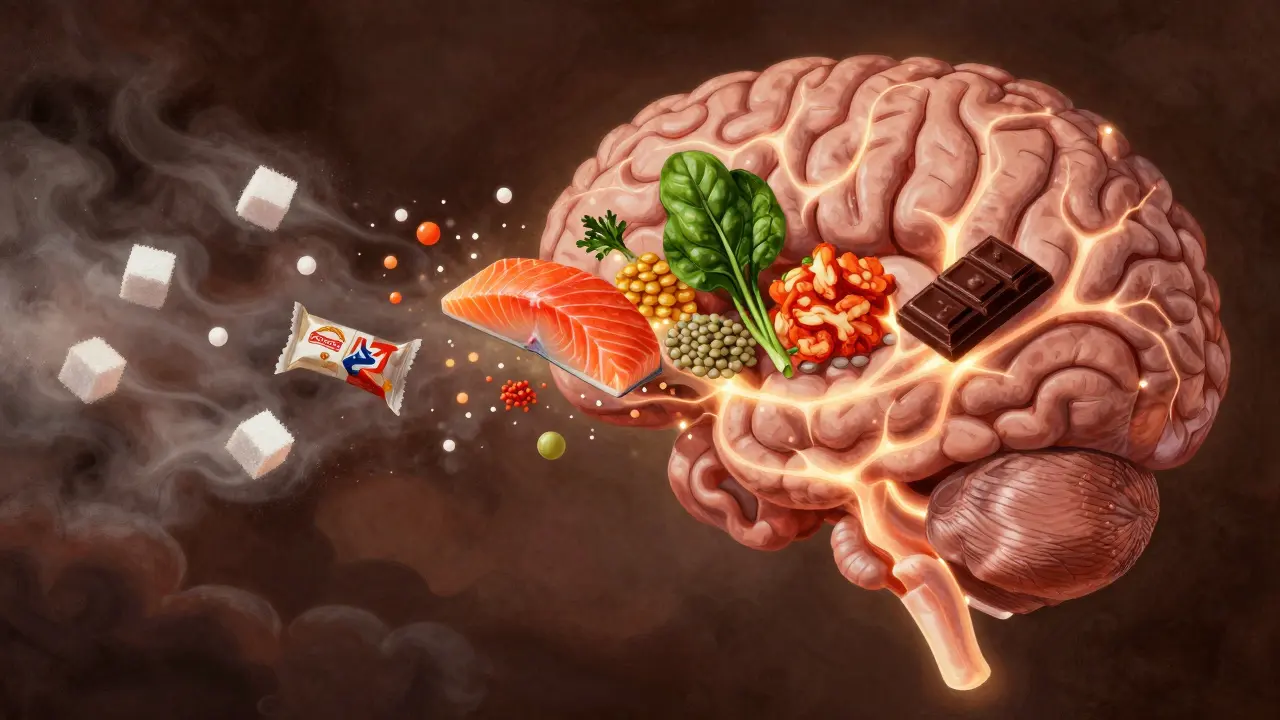
- Fatty fish like salmon, sardines, and mackerel-rich in omega-3s (EPA and DHA). These fats make up 60% of your brain’s structure. Low omega-3 levels are linked to higher rates of depression. A 2024 meta-analysis found that supplementing with omega-3s reduced depressive symptoms in 73% of participants.
- Leafy greens-spinach, kale, Swiss chard. Packed with folate, a B vitamin your brain needs to make dopamine and serotonin. Low folate is one of the most consistent nutritional markers in people with treatment-resistant depression.
- Legumes-lentils, chickpeas, black beans. High in fiber, protein, and complex carbs that stabilize blood sugar and feed good gut bacteria.
- Fermented foods-yogurt with live cultures, kefir, sauerkraut, kimchi. These introduce beneficial bacteria into your gut. One small study showed that eating fermented foods daily for four weeks led to measurable drops in social anxiety.
- Dark chocolate (70% cocoa or higher). Contains flavonoids that increase blood flow to the brain and boost endorphins. Just 20 grams a day can improve mood within hours.
What to Cut Back On
You don’t need to eliminate everything, but reducing these can make a noticeable difference:
- Sugary drinks-soda, energy drinks, sweetened coffee. A single 375ml can of soda has about 40 grams of sugar-more than double the daily limit recommended for mental health.
- Refined carbs-white bread, pastries, crackers. They spike insulin and trigger inflammation. People who eat three or more servings a day are 50% more likely to report feeling ‘down’ regularly.
- Ultra-processed meats-bacon, sausages, deli meats. These contain nitrates and preservatives linked to increased oxidative stress in the brain.
- Artificial sweeteners-aspartame, sucralose. Studies show they can alter gut bacteria in ways that mimic depression-like behaviors in animals, and human trials are starting to show similar patterns.
Real-Life Changes That Work
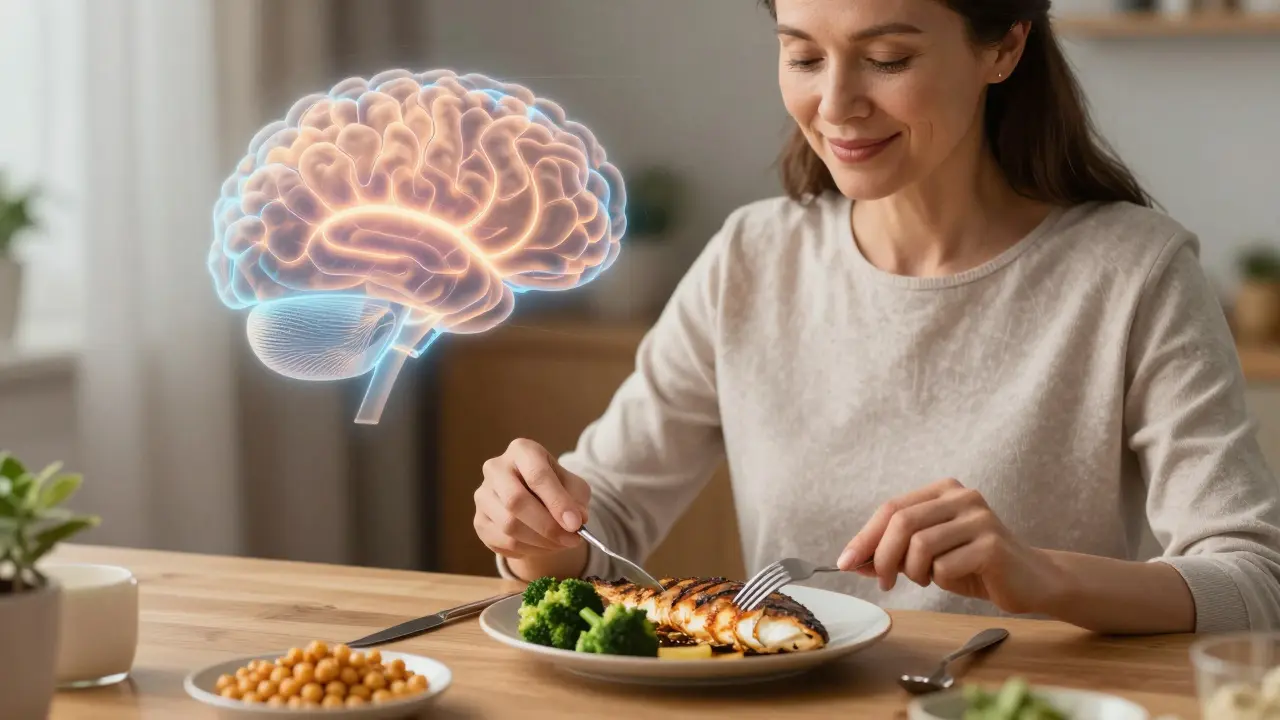
One woman in Brisbane, 42, started having panic attacks every few weeks. She was eating cereal for breakfast, a sandwich for lunch, and takeout for dinner-high in sugar and salt, low in fiber. After switching to a simple routine-oats with berries and nuts for breakfast, a salad with chickpeas and olive oil for lunch, grilled fish with steamed veggies for dinner-her panic attacks dropped from weekly to once every six weeks in just eight weeks. She didn’t start therapy. She didn’t take medication. She just changed her food.
Another man, 58, had been on antidepressants for seven years with little improvement. His doctor suggested a dietary shift. He cut out soda, added two servings of vegetables daily, and ate fatty fish twice a week. Within three months, his doctor reduced his medication dose. He still takes it, but his mood is steadier, and he’s lost 12 kilograms without trying.
These aren’t outliers. They’re examples of what happens when you treat food like medicine for your brain.
It’s Not About Perfection
You don’t need to go fully keto or vegan. You don’t need to buy organic everything. Small, consistent changes matter more than drastic overhauls.
Start with one swap: replace your afternoon candy bar with a handful of almonds and a piece of dark chocolate. Swap soda for sparkling water with lemon. Add one serving of vegetables to your dinner. Eat breakfast within an hour of waking up-it helps stabilize your blood sugar all day.
These aren’t ‘diet rules.’ They’re brain-supporting habits. And they work whether you’re dealing with mild anxiety, occasional low moods, or long-term depression.
Why This Isn’t Just ‘Eat Better’
Most people think mental health is about therapy or medication. And yes, those help. But if your brain is starved of nutrients, or flooded with inflammation from poor food choices, no amount of positive thinking will fully fix it.
Think of it like this: you wouldn’t expect a car to run well on dirty oil. Your brain isn’t any different. It needs clean fuel. Whole foods are that fuel. Processed junk is the sludge.
The science is clear: diet is a powerful, accessible, and often overlooked tool for mental health. It’s not a cure-all. But it’s one of the few things you can control every single day that directly impacts how you feel.
What You Can Do Today
Here’s a simple plan to start improving your diet for mental health:
- Write down what you ate yesterday. Circle the most processed item.
- Replace it tomorrow with a whole food version-swap chips for roasted chickpeas, soda for herbal tea.
- Add one serving of vegetables to your lunch or dinner.
- Drink water first thing in the morning-hydration helps brain function.
- Try one fatty fish meal this week. Canned salmon counts.
You don’t need to do all of it at once. One change, repeated daily, builds momentum. And over time, that momentum changes how you feel-not just physically, but mentally, emotionally, and even socially.
Your brain is listening to what you eat. Start giving it something worth hearing.
Can food really cause depression?
Food doesn’t directly cause depression, but poor diet can significantly increase your risk. Diets high in sugar, refined carbs, and processed fats trigger inflammation and disrupt gut bacteria-both of which are strongly linked to depression. Studies show people who eat mostly ultra-processed foods are up to 40% more likely to develop depression than those who eat whole, unprocessed foods.
How long does it take to see mood improvements from diet changes?
Some people notice small shifts in energy and irritability within 3-5 days-especially if they cut out sugar or soda. More significant changes in mood, anxiety, or sleep usually show up after 3-6 weeks. This is how long it takes for gut bacteria to rebalance and for inflammation to decrease. Consistency matters more than speed.
Do I need supplements to improve my mental health through diet?
Most people don’t. Whole foods provide nutrients in the right balance your body expects. Supplements like omega-3s or vitamin D can help if you’re deficient-but they’re not a substitute for real food. If you’re considering supplements, get a blood test first. Many people take vitamins they don’t need, while missing the real issue: not eating enough vegetables, fiber, or healthy fats.
Is this advice the same for anxiety as it is for depression?
Yes. The same foods that help depression-omega-3s, fiber, fermented foods, magnesium-rich greens-also help reduce anxiety. Blood sugar crashes and gut inflammation trigger the stress response, making anxiety worse. Eating steady, balanced meals helps your nervous system stay calm. Studies show people with anxiety who improved their diet reported fewer panic attacks and less rumination.
What if I can’t afford fresh food?
You don’t need expensive organic produce. Frozen vegetables and fruits are just as nutritious and often cheaper. Canned beans, lentils, and fish (like sardines or tuna) are affordable, shelf-stable, and packed with brain-boosting nutrients. Oats, brown rice, and eggs are low-cost staples that support mental health. Prioritize these over packaged snacks-even on a tight budget, you can eat well.