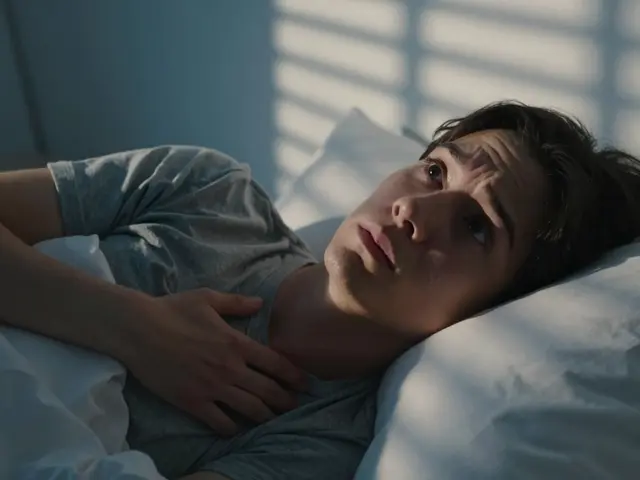

What if every stomach rumble meant cancer? Every headache, a brain tumor? What if checking your pulse three times a minute didn’t make you feel safer-it made you more terrified? You’re not alone. Health anxiety, once called hypochondria, affects about 4% of adults globally, and it’s growing. It’s not just worrying about being sick. It’s being trapped in a loop where your body’s normal signals become alarms, and no amount of reassurance-doctor visits, blood tests, Google searches-can turn them off.
How Health Anxiety Feels in Real Life
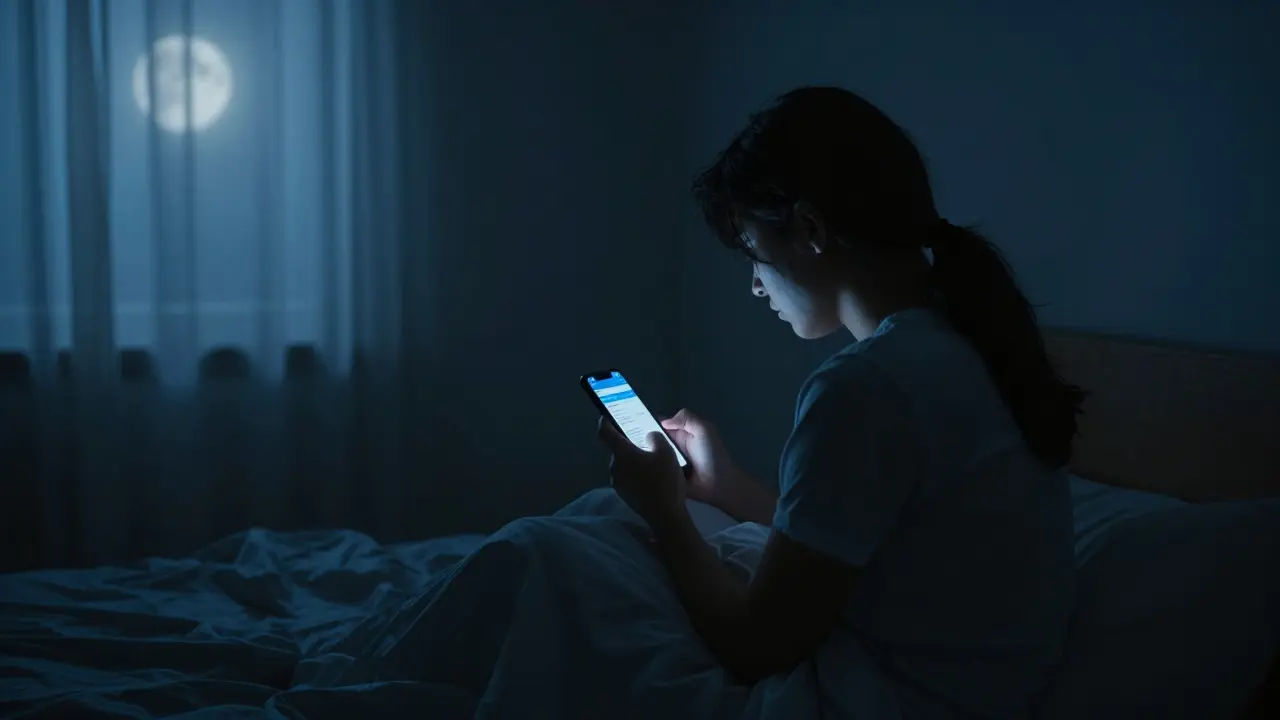
Imagine waking up with a slight sore throat. Within minutes, you’re scrolling through medical sites, reading about throat cancer symptoms. You feel a lump in your neck-just a lymph node, maybe-but now you’re convinced it’s a tumor. You call your GP. They say it’s a cold. You believe them for 12 hours. Then, the itch in your ear starts. Could that be a sign of a rare neurological condition? You check your temperature again. Your heart skips. Is that palpitation or atrial fibrillation?
This isn’t being dramatic. It’s your brain stuck in threat-detection mode. The amygdala, your brain’s alarm system, is overactive. It’s not listening to logic. It’s screaming danger, even when there’s none. People with health anxiety often have a history of serious illness in the family, past medical trauma, or were raised in environments where illness was treated as catastrophic. It’s not weakness. It’s a learned pattern your nervous system can’t shake.
Step 1: Stop Checking and Go Silent
The first rule? Stop Googling. Stop checking your pulse. Stop pressing on your lymph nodes. Stop asking friends if they think you look sick. Every time you check, you’re feeding the anxiety. It’s like pouring gasoline on a fire.
Try this: Set a daily limit. One check per day, max. And only if you’re truly unable to function. Then, after that, you don’t check again. Not for 24 hours. Use a physical timer. Set it for 24 hours. Put your phone in another room. If you feel the urge to check, write down the thought instead: “I’m afraid my chest pain means a heart attack.” Then walk away. Don’t argue with it. Don’t reassure yourself. Just let it sit.
Why does this work? Because you’re breaking the reinforcement cycle. Anxiety thrives on attention. When you stop giving it fuel, it weakens. Studies from the Journal of Anxiety Disorders show that reducing reassurance-seeking behaviors leads to a 60% drop in health anxiety symptoms within 8 weeks.
Step 2: Name the Feeling, Don’t Fight It
When you feel that surge of panic-tight chest, dizziness, racing thoughts-your instinct is to fight it. “I can’t feel this. I need to calm down.” But fighting it is like trying to hold a beach ball underwater. The harder you push, the more it pops up.
Instead, say out loud: “This is health anxiety. It’s not a heart attack. It’s not cancer. It’s my brain misfiring.” Say it like you’re talking to a scared child. Not with anger. With calm. You’re not denying the feeling. You’re labeling it. That simple act activates the prefrontal cortex-the part of your brain that thinks logically-and it starts to quiet the panic.
One woman I worked with in Perth used to scream when she felt her heart race. She started whispering, “This is anxiety. It’s not real.” Within two weeks, her panic attacks dropped from five times a day to once every three days. Naming it took away its power to surprise her.
Step 3: Replace Rumination with Action
Health anxiety thrives on mental loops. You replay symptoms. You imagine worst-case scenarios. You analyze every sensation. This is called rumination-and it’s the engine of the whole cycle.
Break it by replacing rumination with action. When you catch yourself spiraling, do something that requires your full attention. Not scrolling. Not listening to music. Something physical and simple:
- Wash your hands slowly, focusing on the water temperature and the soap’s scent.
- Walk outside for 10 minutes and name five things you can see, four you can touch, three you can hear, two you can smell, one you can taste.
- Build a tower with 10 Legos or stack coins.
These aren’t distractions. They’re rewiring tools. They force your brain out of the anxiety loop and into the present. A 2024 study in Behavior Research and Therapy found that people who used sensory grounding techniques twice daily cut their health anxiety symptoms by 55% in 6 weeks.
Step 4: Schedule Your Worry Time
Trying to stop worrying all day is impossible. But you can contain it.
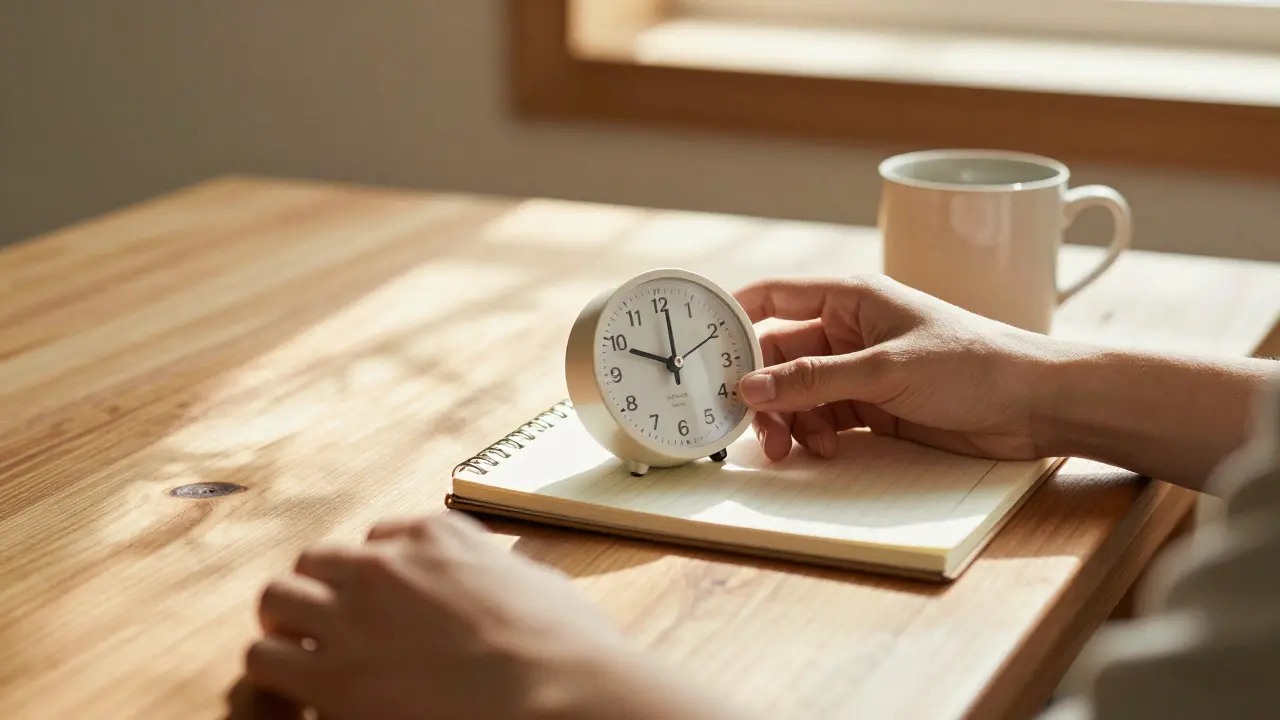
Set a 15-minute daily “worry window”-same time, same place. 7:30 p.m., on the couch, with a notebook. When anxious thoughts pop up during the day, write them down: “My cough might be lung cancer.” Save them. Don’t think about them. Just put them in the list.
At your scheduled time, open the notebook. Read each worry. Then ask: “Is this something I can act on right now?” If yes-like if you’ve had a persistent cough for three weeks-then make a doctor’s appointment. If no-like “I think my headache is a tumor”-then say, “I’ve noted this. I’ll revisit it tomorrow.” Then close the notebook. Walk away.
This isn’t about suppressing thoughts. It’s about giving them a container. People who do this report feeling less trapped. Their anxiety doesn’t vanish, but it stops hijacking their day.
Step 5: Rebuild Trust in Your Body
Health anxiety makes you feel like your body is a traitor. Every sensation is a betrayal. But your body isn’t your enemy. It’s your home. You’ve just lost trust in it.
Start small. Pick one daily activity that used to feel safe. Drinking coffee. Walking to the mailbox. Taking a shower. Do it slowly. Pay attention to how your body feels-not to find signs of illness, but to notice what’s normal.
After your shower, sit for 30 seconds. Notice: “My skin feels warm. My breath is steady. My feet are on the floor.” That’s it. No analysis. Just presence.
Over time, you’ll start to notice that most sensations are harmless. Your body isn’t falling apart. It’s doing its job. You’re just relearning how to listen without fear.
When to Seek Professional Help
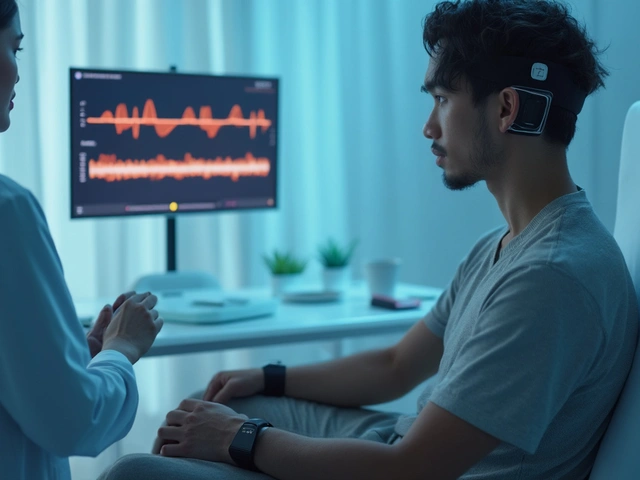
You can do a lot on your own. But if you’ve tried these steps for 6-8 weeks and still feel trapped, it’s time to see a therapist trained in Cognitive Behavioral Therapy (CBT) for health anxiety. CBT is the most proven treatment. It doesn’t just teach you to think differently-it rewires your brain’s response to bodily sensations.
Look for therapists who use Exposure and Response Prevention (ERP), a type of CBT that helps you face feared sensations without reacting. For example, deliberately letting your heart rate rise through light exercise, then sitting with the discomfort without checking your pulse. It sounds scary. But done right, it’s the most effective way to break the cycle.
Medication like SSRIs can help too, especially if anxiety is severe. But it’s not a cure. It’s a bridge. The real work is in the therapy.
What Health Anxiety Is Not
It’s not being “too careful.” It’s not being “neurotic.” It’s not a character flaw. It’s a neurological pattern that developed because your brain learned to associate normal bodily sensations with danger. And like any learned pattern, it can be unlearned.
It’s not the same as having a real illness. People with health anxiety often have no underlying disease. But even if they do, the anxiety is still a separate problem that needs its own treatment. You can have cancer and health anxiety. You can have a healthy body and crippling health anxiety. They’re not the same thing.
Progress Isn’t Linear
Some days, you’ll feel free. Other days, you’ll be back to checking your pulse at 3 a.m. That’s normal. Recovery isn’t about never feeling anxious. It’s about not letting anxiety control your choices.
One man I knew in Fremantle had health anxiety for 12 years. He visited 17 doctors. He had 23 blood tests. He stopped working. He didn’t leave his house for six months. He started using these steps. After four months, he went on a weekend trip. He didn’t check his symptoms once. He didn’t call his doctor. He just sat by the ocean and listened to the waves. That was his victory.
Your victory might be smaller. Maybe it’s just skipping one Google search. Maybe it’s going to the grocery store without checking your neck. That’s enough. Keep going.
Final Thought: You’re Not Broken
You didn’t choose this. But you’re not broken because you have it. Your brain is trying to protect you-it just got the message wrong. The fact that you’re reading this means you’re already on the path to changing it.
Health anxiety doesn’t have to be your whole story. It can be a chapter. A hard one. But not the ending.
Is health anxiety the same as being a hypochondriac?
The term "hypochondriac" is outdated and stigmatizing. Health anxiety is the clinical term used today. It’s not about being overly dramatic-it’s a recognized mental health condition where the brain misinterprets normal physical sensations as signs of serious illness. The DSM-5 classifies it as Illness Anxiety Disorder.
Can health anxiety cause real physical symptoms?
Yes-but not because you have a disease. Anxiety triggers the stress response: increased heart rate, muscle tension, dizziness, stomach upset, tingling. These are real physical reactions, but they’re caused by your nervous system, not by cancer, heart disease, or MS. Learning this difference is key to breaking the cycle.
How long does it take to recover from health anxiety?
There’s no fixed timeline. Some people see improvement in 4-6 weeks with consistent practice. Others take 6-12 months. It depends on how long you’ve had it, how intense it is, and how consistently you apply the steps. The goal isn’t to never feel anxious-it’s to stop letting anxiety control your life.
Should I keep going to the doctor if I have health anxiety?
Yes-but with boundaries. If you have a new, persistent symptom that lasts more than 2-3 weeks, see a doctor. But if you’re going because you’re scared, not because something’s changed, it’s time to pause. Work with your doctor to set up a plan: one check-up per year, unless a new symptom appears. Avoid repeated testing for the same issue. Too many tests can reinforce the fear.
Can I beat health anxiety without therapy?
Many people do. The steps in this guide-stopping checking, naming the anxiety, grounding, scheduling worry-are based on proven CBT techniques and can be done alone. But if you’re stuck, overwhelmed, or it’s interfering with work, relationships, or sleep, therapy makes recovery faster and more lasting. There’s no shame in asking for help.