

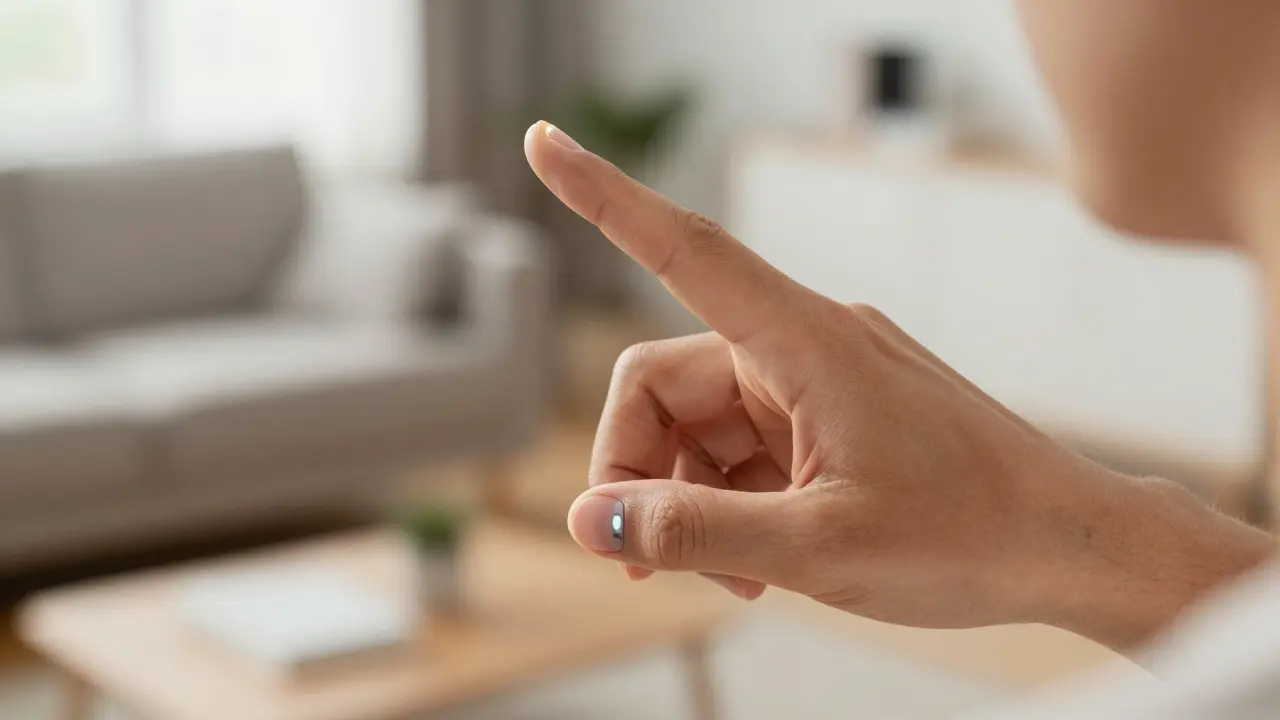
Imagine if your body could talk to you directly. Not through vague feelings of tension or sudden headaches, but through clear, real-time data that shows exactly what is happening inside you right now. That is the core promise of Biofeedback, a therapeutic technique that uses electronic monitoring to convey information about physiological processes. Instead of guessing whether you are stressed, relaxed, or anxious, you see the numbers on a screen. You watch your heart rate slow down as you breathe deeper. You see your muscle tension drop when you let go of that clenched jaw.
This isn't science fiction or a new fad. It is a clinically validated method used by therapists, athletes, and everyday people to regain control over involuntary bodily functions. For years, we were told that things like blood pressure, heart rate, and skin temperature were entirely automatic-outside our conscious control. Biofeedback challenges that assumption. It proves that with the right feedback loop, you can learn to influence these systems just like you learned to ride a bike or play an instrument.
How Biofeedback Actually Works
The mechanism behind biofeedback is surprisingly simple, even if the technology looks complex. Sensors attach to your body to measure specific physiological signals. These signals are amplified and converted into visual or auditory cues-like a graph moving up and down, or a tone changing pitch. When you change your mental state, the cue changes. If you relax, the tone might become smoother. If you tense up, it might get jagged.
This creates a direct link between your internal state and external perception. Over time, you learn to recognize the subtle sensations that precede stress or tension before they become overwhelming. You build a mental muscle for regulation. The goal isn't to rely on the machine forever; it is to use the machine as a tutor until you can do it independently. This process is often compared to learning a sport. At first, you need a coach to correct your form. Eventually, you feel the movement yourself and adjust automatically.
Common types of biofeedback include:
- Electromyography (EMG): Measures muscle activity. Useful for chronic pain, migraines, and tension headaches.
- Heart Rate Variability (HRV): Tracks the variation in time between heartbeats. Higher variability usually indicates better stress resilience and cardiovascular health.
- Thermal Biofeedback: Monitors skin temperature. Cold hands often signal stress and restricted blood flow; warming them up indicates relaxation.
- Electrodermal Activity (EDA): Measures sweat gland activity, which spikes during emotional arousal or anxiety.
What Conditions Can Biofeedback Treat?
Biofeedback is not a cure-all, but it is highly effective for conditions driven by the nervous system's response to stress. Research supports its use for a wide range of issues, often as part of a broader treatment plan.
| Condition | Type of Biofeedback Used | Primary Benefit |
|---|---|---|
| Anxiety Disorders | HRV, EDA | Reduces physiological arousal and panic symptoms |
| Migraine and Tension Headaches | EMG, Thermal | Lowers muscle tension and improves blood flow to the head |
| Hypertension (High Blood Pressure) | HRV, Blood Pressure Monitoring | Helps lower resting blood pressure naturally |
| Incontinence | EMG (Pelvic Floor) | Strengthens weak pelvic muscles or relaxes tight ones |
| ADHD | Neurofeedback (EEG) | Improves focus and impulse control through brainwave training |
| Insomnia | HRV, EMG | Calms the nervous system to promote sleep onset |
For example, someone suffering from frequent migraines might use thermal biofeedback. They place sensors on their fingertips and watch a screen showing their hand temperature. As they practice relaxation techniques, they aim to raise the temperature. Warmer hands mean better blood circulation to the head, which can prevent migraine onset. Studies have shown this approach can reduce headache frequency by up to 50% in some patients.
The Role of Heart Rate Variability (HRV) in Modern Biofeedback
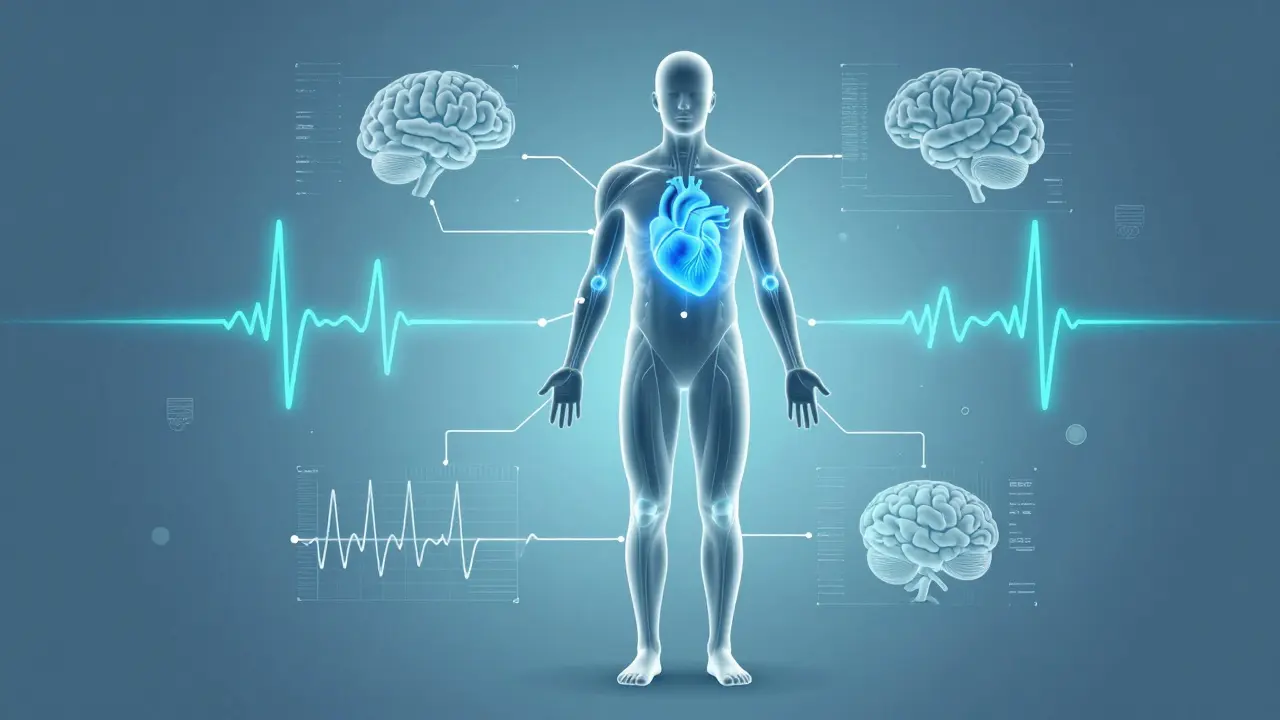
If there is one metric that has gained massive popularity in recent years, it is Heart Rate Variability, or HRV. Unlike average heart rate, which just tells you how fast your heart is beating, HRV measures the tiny differences in time between each beat. A healthy heart doesn't beat like a metronome; it varies slightly based on breathing, posture, and neural input.
High HRV is generally associated with a flexible, resilient nervous system. Low HRV suggests your body is stuck in "fight or flight" mode. Many modern biofeedback apps and devices focus heavily on HRV because it provides immediate feedback on your stress state. You can check your HRV in the morning to gauge your readiness for intense exercise or work, and use it throughout the day to trigger recovery protocols.
Coherent breathing-a technique where you breathe at a specific rate (often six breaths per minute)-is commonly used to boost HRV. By syncing your breath with your heart rhythm, you create a phenomenon called respiratory sinus arrhythmia, which optimizes oxygen exchange and calms the vagus nerve. This is why you’ll often hear biofeedback practitioners emphasize slow, deep breathing.
At-Home vs. Clinical Biofeedback: What’s the Difference?
You don’t necessarily need a therapist to start exploring biofeedback. The market has flooded with consumer-grade devices and smartphone apps that offer similar benefits. However, there are distinct differences between clinical and at-home approaches.
Clinical biofeedback is guided by a trained professional who interprets your data, sets personalized goals, and teaches you specific cognitive-behavioral strategies alongside the physiological training. They ensure you are targeting the right metrics for your condition. For instance, a clinician might combine EMG biofeedback for jaw clenching with counseling for stress management.
At-home biofeedback, on the other hand, relies on self-guided apps and wearable sensors. Devices like smartwatches, chest straps, or finger clips connect to apps that visualize your data. While less expensive and more convenient, these tools require discipline. Without a guide, you might misinterpret the data or fail to develop the underlying skills needed for long-term change. Think of clinical biofeedback as having a personal trainer, while at-home biofeedback is like buying a gym membership-you still have to show up and know what you’re doing.
Getting Started: A Practical Guide
If you want to try biofeedback, here is a straightforward path to begin. First, identify your primary goal. Are you trying to reduce anxiety? Improve sleep? Manage chronic pain? Your goal will determine which type of biofeedback is most relevant.
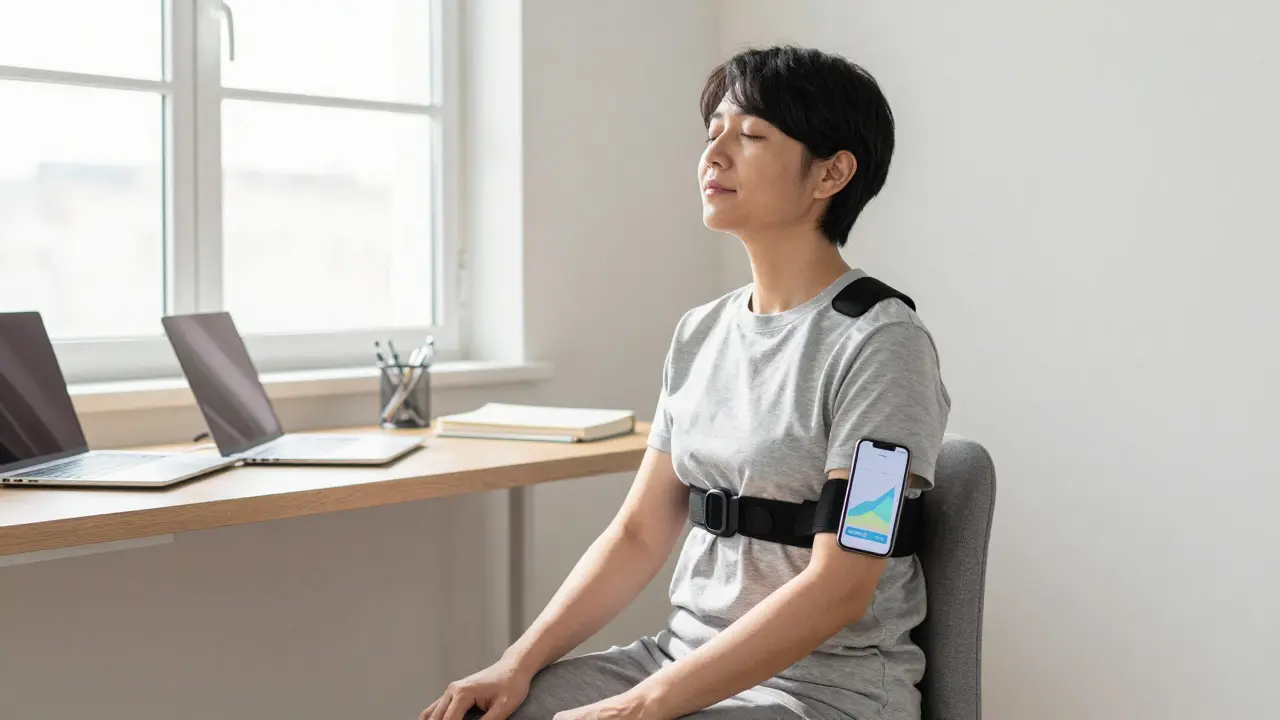
- Choose a Tool: For beginners, HRV-focused apps are accessible and effective. Look for apps that pair with a Bluetooth chest strap or earlobe sensor for accuracy. Finger-based sensors on phones can be less reliable due to motion artifacts.
- Find a Quiet Space: Practice in a distraction-free environment. Sit comfortably with your back supported. Close your eyes if it helps you focus inward.
- Establish a Baseline: Spend five minutes just observing your natural readings without trying to change anything. Notice what your default stress level looks like on the screen.
- Apply a Technique: Try slow diaphragmatic breathing. Inhale for four seconds, exhale for six seconds. Watch how the feedback changes. Does the line smooth out? Does the score increase?
- Practice Consistency: Short, daily sessions are more effective than occasional long ones. Aim for 10-15 minutes a day. Over weeks, you will notice that you can achieve this calm state faster and without the device.
Remember, the device is only a teacher. The real work happens in your mind-body connection. If you find yourself frustrated by the numbers, step back. Biofeedback should feel empowering, not stressful. If the numbers go down, it doesn’t mean you failed; it means you have room to grow.
Pitfalls to Avoid
One common mistake is obsessing over the data. Some users become anxious if their scores aren’t perfect, which ironically raises their stress levels. Keep the focus on how you feel, not just what the screen says. Another pitfall is expecting instant results. Neuroplasticity takes time. Rewiring your nervous system’s response to stress requires repetition and patience.
Also, be cautious with unverified claims. While biofeedback is evidence-based for many conditions, it is not a magic bullet for every ailment. Always consult with a healthcare provider before using biofeedback to manage serious medical conditions like hypertension or severe anxiety disorders. It works best as a complementary therapy, not a replacement for necessary medication or medical care.
Is biofeedback safe for everyone?
Yes, biofeedback is generally considered very safe because it is non-invasive and does not involve drugs or surgery. It simply monitors existing physiological processes. However, individuals with certain cardiac conditions or severe psychiatric disorders should consult a doctor before starting, especially if using advanced forms like neurofeedback.
How many sessions does it take to see results?
Results vary depending on the condition and individual consistency. Some people report feeling calmer after just one session. For lasting changes, such as reduced migraine frequency or improved anxiety management, most studies suggest 8 to 10 sessions of guided practice, followed by daily home maintenance.
Can I do biofeedback without expensive equipment?
You can practice the principles of biofeedback without any gear by focusing on mindful breathing and body scans. However, for precise training, affordable options exist. Smartphone-compatible sensors cost significantly less than clinical machines. Many free apps also offer basic HRV tracking using your phone’s camera and flashlight to detect pulse wave variations.
Does insurance cover biofeedback therapy?
Coverage depends on your provider and location. In many countries, including Australia and parts of the US, biofeedback may be covered if prescribed by a physician for specific conditions like hypertension, migraines, or incontinence. Check with your insurer for codes related to "bioelectrical medicine" or "behavioral therapy."
What is the difference between biofeedback and meditation?
Meditation is a practice of mindfulness and awareness, often without external feedback. Biofeedback adds a technological layer that provides immediate data on your physiological state. While meditation teaches you to observe your thoughts, biofeedback teaches you to control your body’s responses. They are highly complementary and often used together.