

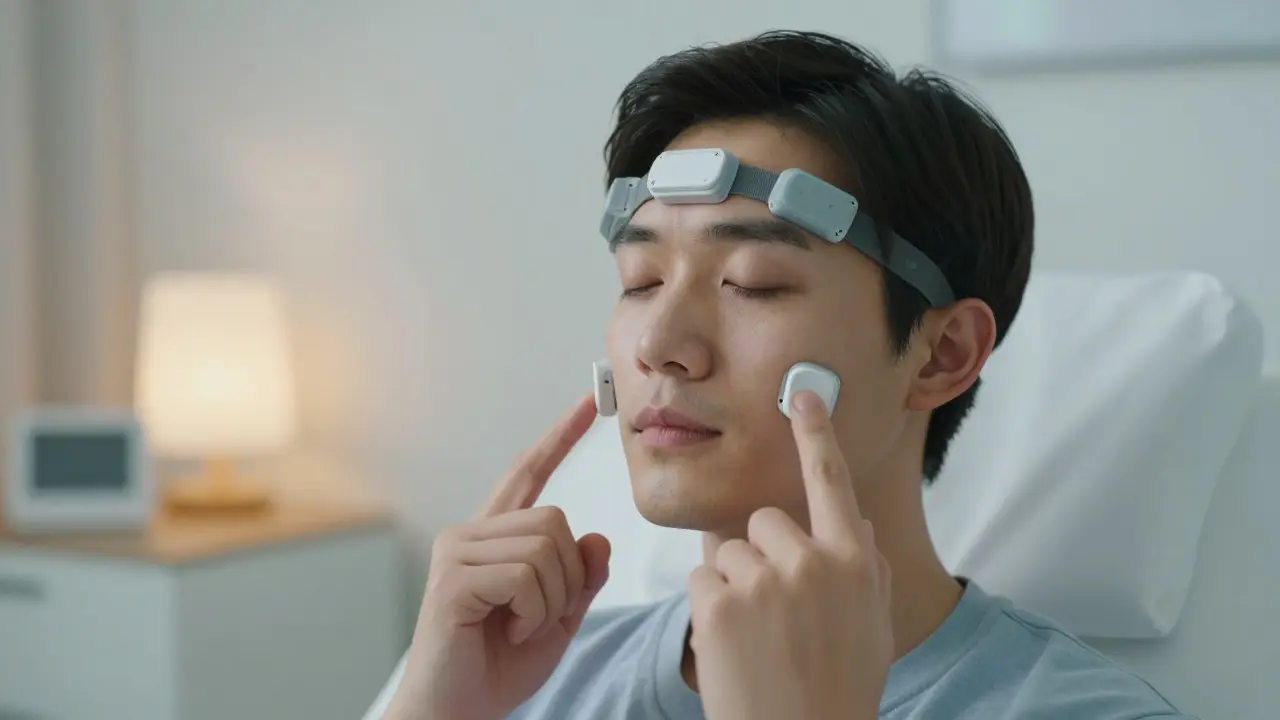
Imagine if you could see your own nervous system working in real-time. Not just feeling stressed or calm, but actually watching the data on a screen as your heart rate slows down or your muscles relax. That is exactly what Biofeedback is a non-invasive therapeutic technique that uses electronic monitoring to convey information about physiological processes to patients, enabling them to gain voluntary control over these functions. It bridges the gap between mind and body, turning invisible internal states into visible, manageable metrics.
For years, we’ve been told to “just breathe” or “relax.” But when you are in the middle of a panic attack or trapped in chronic anxiety, those instructions feel impossible. Biofeedback changes the script. It doesn’t ask you to guess how relaxed you are; it shows you. By providing immediate feedback from your body’s signals-like skin temperature, muscle tension, or heart rate variability-you learn to recognize the physical signs of stress and, more importantly, how to change them.
What Is Biofeedback and How Does It Work?
Biofeedback is not magic, nor is it a quick fix. It is a form of behavioral medicine. Think of it like learning to play a musical instrument. At first, you can’t hear the notes clearly. With practice and guidance (the feedback), you start to understand which finger movements produce the right sound. In biofeedback, the “instrument” is your autonomic nervous system-the part that controls breathing, digestion, and heart rate without you thinking about it.
The process typically involves small sensors placed on your body. These sensors measure specific physiological activities. The data is then sent to a computer or device that translates it into easy-to-understand visuals, like a graph going up and down or a video game character moving faster when you are calm. This visual cue allows you to experiment with different relaxation techniques until you find the one that actually works for your unique physiology.
| Type | Physiological Signal Measured | Primary Use Cases |
|---|---|---|
| EMG Biofeedback | Muscle electrical activity (tension) | Tension headaches, jaw clenching, posture issues |
| Thermal Biofeedback | Skin temperature | Migraines, Raynaud’s phenomenon, stress reduction |
| HRV Biofeedback | Heart Rate Variability (variation in time between beats) | Anxiety, depression, PTSD, emotional regulation |
| EEG Biofeedback (Neurofeedback) | Brain wave patterns | ADHD, insomnia, seizure disorders, focus issues |
| Respiratory Biofeedback | Breathing rate and depth | Asthma, panic attacks, general stress management |
Each type targets different aspects of physical health. For example, Electromyography (EMG) biofeedback is a technique that measures muscle tension using electrodes placed on the skin, helping individuals identify and reduce unnecessary muscle contraction. If you grind your teeth at night due to stress, EMG biofeedback helps you realize when your jaw is tight during the day so you can consciously release it before it becomes a habit.
The Science Behind Biofeedback and Mental Health
Why does this work? The core mechanism is neuroplasticity. Your brain is capable of rewiring itself based on experience. When you repeatedly pair a relaxation technique with the visual confirmation that your body is calming down, you strengthen the neural pathways associated with that state. Over time, the response becomes automatic. You no longer need the sensor to tell you you’re calm; you just know.
Research supports this approach. According to the American Psychological Association, biofeedback has strong empirical support for treating conditions like migraine headaches and tension-type headaches. More recent studies have shown promising results for anxiety disorders, post-traumatic stress disorder (PTSD), and even attention-deficit/hyperactivity disorder (ADHD). For instance, a meta-analysis published in *JAMA Psychiatry* found that neurofeedback significantly improved symptoms of ADHD compared to placebo treatments, suggesting it can be a viable alternative or complement to medication.
However, it’s crucial to manage expectations. Biofeedback is not a cure-all. It is a skill-building tool. Just like going to the gym, you have to show up and put in the work. One session won’t transform your mental health. Consistency is key. Most clinical protocols recommend 8 to 15 sessions to see lasting changes in baseline stress levels.
Biofeedback for Anxiety and Panic Disorders
Anxiety often feels like losing control. Your heart races, your breath shortens, and your thoughts spiral. Biofeedback interrupts this cycle by giving you objective data. Instead of fearing the physical sensations of anxiety, you learn to view them as information.
Heart Rate Variability (HRV) biofeedback is particularly effective here. High HRV indicates a healthy, flexible nervous system that can adapt to stress. Low HRV suggests your body is stuck in “fight or flight” mode. During an HRV session, you might use a breathing pacer that guides you to inhale and exhale at a specific rhythm (often around 6 breaths per minute). As you sync your breathing with the device, you watch your HRV score rise on the screen. This positive reinforcement teaches your brain that slow, rhythmic breathing directly calms your heart.
This technique is especially useful for panic attacks. When you feel a panic attack coming on, you can apply the breathing pattern you practiced. Because you’ve trained your body to respond to this pattern, the physical escalation of panic is often dampened before it reaches peak intensity.

Treating Depression and Mood Regulation
While less commonly discussed than its role in anxiety, biofeedback is also being explored for depression. Traditional talk therapy addresses cognitive patterns, but depression often has a strong somatic component-lethargy, sleep disturbances, and gastrointestinal issues. Biofeedback addresses the body side of the equation.
Neurofeedback, a specialized form of biofeedback that monitors brain waves, has shown potential in treating depression. Some depressed individuals exhibit asymmetrical brain activity, with less activity in the left frontal lobe, which is associated with positive emotions and approach behavior. Neurofeedback training aims to increase activity in this region. Studies suggest that combining neurofeedback with standard care can lead to greater improvements in mood than standard care alone.
Additionally, thermal biofeedback can help with the fatigue often associated with depression. By teaching patients to warm their hands through visualization and relaxation, they improve blood flow and energy levels, combating the physical heaviness that makes getting out of bed difficult.
Who Should Consider Biofeedback?
Biofeedback isn’t for everyone, but it is highly effective for specific groups. You might benefit from biofeedback if:
- You suffer from chronic pain conditions like migraines or fibromyalgia.
- You have anxiety or PTSD that hasn’t fully responded to medication or therapy.
- You struggle with insomnia related to racing thoughts or physical tension.
- You want to improve performance under pressure (athletes, musicians, public speakers).
- You prefer non-pharmacological interventions for mental health.
It is also worth noting that biofeedback requires a certain level of motivation and cognitive ability. You need to be able to understand the feedback and engage in the learning process. It may not be suitable for individuals with severe cognitive impairments or those who are currently in acute crisis requiring immediate stabilization.

How to Get Started with Biofeedback Therapy
If you’re interested in trying biofeedback, the first step is finding a qualified provider. Look for a therapist certified by the Biofeedback Certification International Alliance (BCIA). This ensures they have undergone rigorous training and adhere to ethical standards. In Australia, many psychologists, physiotherapists, and occupational therapists offer biofeedback services.
During your initial consultation, the therapist will assess your needs and determine which type of biofeedback is most appropriate. They will explain the equipment and set realistic goals. Expect to pay out-of-pocket for most sessions, although some private health insurance policies in Australia cover biofeedback if prescribed by a GP for a diagnosed condition. Always check with your insurer beforehand.
Home biofeedback devices are becoming more accessible. Consumer-grade apps and wearable devices can provide basic HRV or respiratory feedback. While these are great for maintenance and daily practice, they lack the precision and professional guidance of clinical equipment. Use them as supplements to, not replacements for, professional therapy if you are dealing with significant mental health challenges.
Potential Side Effects and Limitations
Biofeedback is generally safe with minimal side effects. Some people report mild headaches, fatigue, or increased anxiety during the early stages of training. This is usually temporary and resolves as you become more comfortable with the process. Rarely, individuals with epilepsy should consult a doctor before starting neurofeedback, as flashing lights or specific brain wave patterns could potentially trigger seizures in susceptible individuals.
The main limitation is accessibility and cost. Without insurance coverage, regular sessions can be expensive. Additionally, biofeedback requires time and commitment. It is not a passive treatment. You must actively participate in each session and practice the skills at home. If you are looking for a quick, effortless solution, biofeedback may disappoint you.
Integrating Biofeedback into Your Daily Routine
The true power of biofeedback lies in transferring the skills learned in therapy to everyday life. Here are some practical ways to integrate these techniques:
- Morning Check-In: Spend five minutes each morning checking your body for tension. Use the breathing techniques you learned to set a calm tone for the day.
- Stress Triggers: Identify common stressors (e.g., traffic, difficult emails). Practice your relaxation response immediately after encountering these triggers to prevent cumulative stress.
- Sleep Hygiene: Use thermal or respiratory biofeedback techniques before bed to signal to your body that it is time to rest. Focus on warming your hands and slowing your breath.
- Performance Prep: Before important events, use HRV biofeedback to optimize your focus and calmness. Aim for a steady, rhythmic breathing pattern.
Consistency is more important than duration. Ten minutes of daily practice yields better results than one hour once a week. Over time, these practices become second nature, enhancing your overall resilience to stress and improving your mental well-being.
Is biofeedback covered by Medicare or private health insurance in Australia?
Coverage varies. Medicare generally does not cover biofeedback unless it is part of a broader psychological intervention under a Mental Health Treatment Plan. Private health insurance may cover it if you have extras cover for allied health services or if it is prescribed for a specific medical condition. Always check with your provider for pre-approval.
How long does it take to see results from biofeedback?
Most people notice some improvement within the first few sessions, but significant, lasting changes typically require 8 to 15 sessions. The timeline depends on the condition being treated, the individual’s consistency in practice, and the severity of symptoms.
Can I do biofeedback at home?
Yes, there are consumer-grade devices and apps available for home use. However, they are best used for maintenance after learning the skills from a certified professional. Clinical equipment offers more precise measurements and expert guidance, which is crucial for complex conditions.
Is biofeedback painful?
No, biofeedback is non-invasive and painless. Sensors are attached to the skin with adhesive pads or clips. You might feel slight pressure from the sensors, but there is no discomfort involved in the process.
What is the difference between biofeedback and neurofeedback?
Biofeedback is a broad term that includes any feedback from bodily functions. Neurofeedback is a specific type of biofeedback that focuses solely on brain wave activity. While all neurofeedback is biofeedback, not all biofeedback is neurofeedback.