

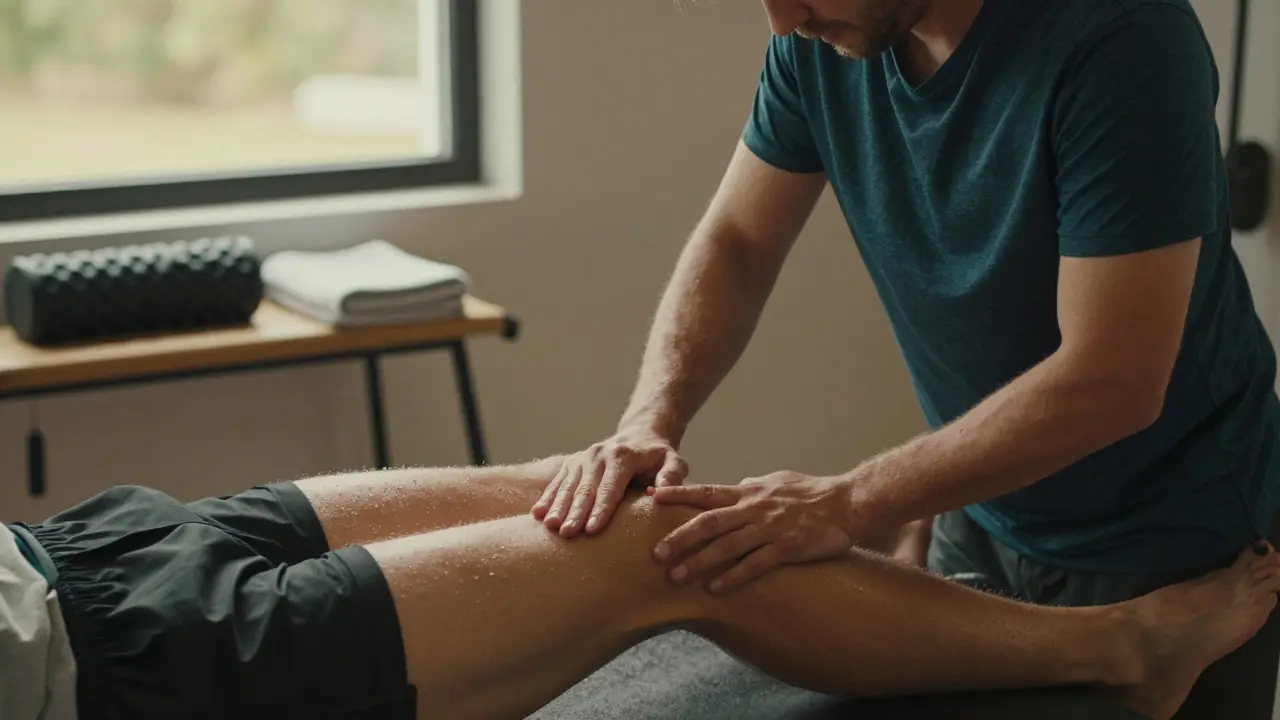
When you see elite athletes bounce back from a tough game or training session in record time, it’s not just genetics or grit at work. Behind the scenes, there’s a tool they rely on every single day: sports massage. It’s not just a luxury or a post-race treat-it’s a core part of sports medicine, backed by decades of research and used by teams from the NFL to the Australian Rules Football League.
Think of your body like a high-performance engine. You wouldn’t run a race car without regular tune-ups, oil changes, and checks for overheating. Your muscles, tendons, and connective tissues need the same attention. Sports massage doesn’t just feel good-it actively repairs, restores, and prepares your body for the next challenge.
What Exactly Is Sports Massage?
Sports massage is a targeted form of soft tissue therapy designed for people who move a lot-athletes, weekend warriors, dancers, even construction workers. It’s different from a relaxing spa massage. You won’t find lavender candles or slow, gentle strokes. Instead, you’ll get deeper pressure, specific techniques like trigger point release, myofascial release, and effleurage, all timed to match your training cycle.
There are four main types, each serving a different purpose:
- Pre-event massage: Light, stimulating strokes done 15-45 minutes before activity to increase blood flow and warm up muscles.
- Post-event massage: Soothing, longer strokes after competition to flush out lactic acid and reduce muscle stiffness.
- Restorative massage: Done during training blocks to manage fatigue, improve flexibility, and prevent overuse injuries.
- Rehabilitative massage: Used after injury to break down scar tissue, restore range of motion, and speed healing.
A 2023 study published in the Journal of Athletic Training found that athletes who received regular sports massage reduced muscle soreness by up to 30% compared to those who only stretched. That’s not minor-it’s the difference between being ready to train the next day or sitting out for two days.
How It Works: Science Behind the Pressure
It’s easy to think massage is just about feeling good. But the real benefits are physical, measurable, and repeatable.
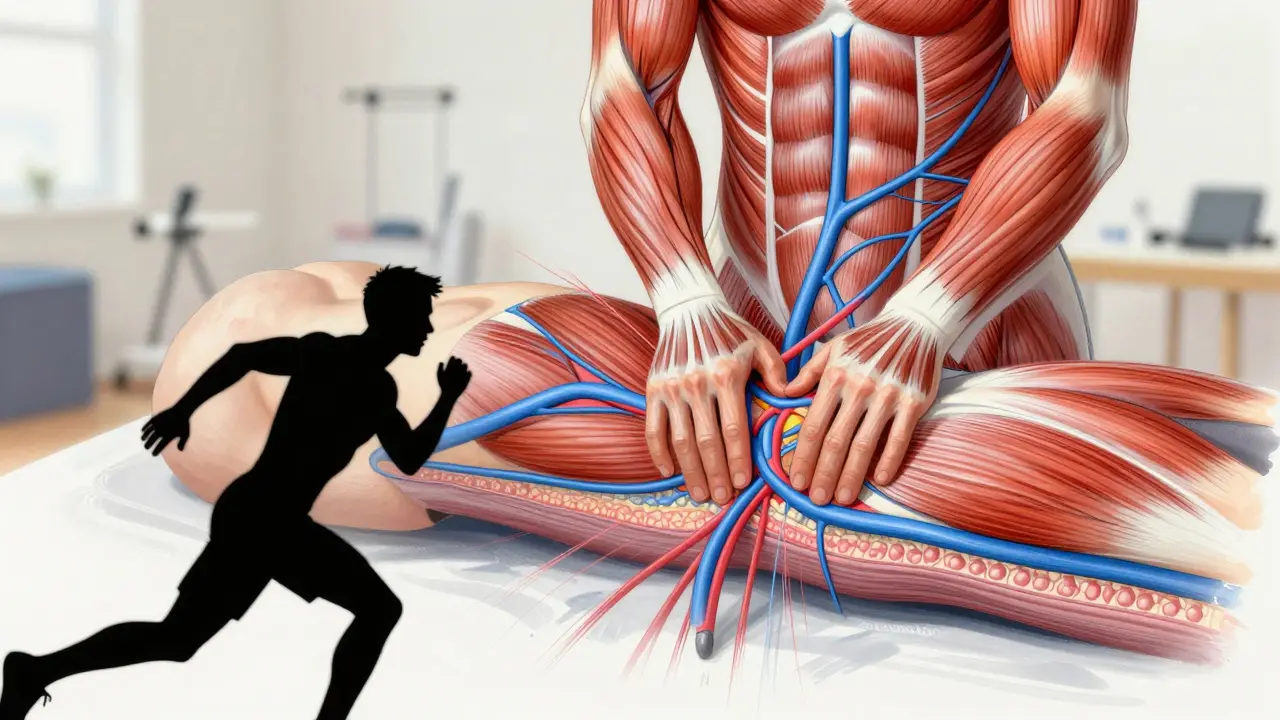
First, it increases circulation. Deep pressure helps push blood through tight areas, bringing oxygen and nutrients where they’re needed most. At the same time, it helps remove metabolic waste-like lactate and inflammatory cytokines-that builds up after hard workouts.
Second, it affects your nervous system. Sports massage lowers cortisol (the stress hormone) and boosts serotonin and dopamine. That’s why you feel calmer after a session, even if you’re still sore. A 2022 review in Frontiers in Neurology showed that massage therapy reduced perceived pain levels by 40% in athletes with chronic muscle strain.
Third, it breaks down adhesions. When muscles get overworked, fibers stick together like tangled rope. These adhesions limit movement and create imbalances that lead to injury. Sports massage uses cross-fiber friction to gently separate those fibers, restoring normal glide between tissues.
One Perth-based physiotherapist working with local rugby teams noticed that players who missed their weekly sports massage sessions were 2.3 times more likely to pull a hamstring over the next two weeks. That’s not coincidence-it’s biomechanics.
It’s Not Just for Pros
You don’t need to be a professional athlete to benefit. If you run three times a week, lift weights, or play weekend soccer, your body is under stress. Most people wait until they’re injured to seek help. But sports massage is preventive medicine.
Take Sarah, a 38-year-old teacher who runs half-marathons. She started getting biweekly sports massages after a nagging IT band pain kept her from training. After six weeks, the pain vanished. She didn’t change her shoes, her mileage, or her diet. She just added massage. Now she gets it every 10 days-even when she’s not injured.
Same goes for office workers who sit all day. Tight hip flexors, stiff shoulders, and rounded posture? Those aren’t just "bad habits." They’re physical adaptations that can lead to chronic pain. A monthly sports massage can reset those patterns before they become problems.
Where It Fits in Sports Medicine
Sports medicine isn’t just doctors and MRIs. It’s a team. Physiotherapists, strength coaches, nutritionists, and massage therapists all play roles. In fact, in top-tier programs like those at the Australian Institute of Sport, massage therapists are on the same roster as physios.
Here’s how it integrates:
- After a strength session, massage helps muscles recover faster so you can train again sooner.
- Before a competition, it primes the nervous system for peak performance.
- During rehab, it prevents scar tissue from locking joints.
- Between injuries, it keeps tissues healthy so they don’t break down.
One 2024 study tracked 120 endurance athletes over six months. Half received monthly sports massage. The other half didn’t. The massage group had 52% fewer overuse injuries. They also trained 17% more total hours without increased fatigue.
That’s the power of proactive care. You’re not just treating pain-you’re preventing it.
What to Look for in a Sports Massage Therapist
Not every massage therapist knows sports massage. Look for someone with:
- Certification in sports massage or sports physiotherapy
- Experience working with athletes in your sport
- Understanding of movement patterns and biomechanics
- Willingness to communicate with your physio or coach
A good therapist will ask about your training schedule, recent injuries, and goals. They won’t just start massaging. They’ll assess. They’ll adjust. They’ll tell you if you need more than massage-like mobility work or strength corrections.
Avoid anyone who promises "miracle cures" or says massage can replace physical therapy. It’s a tool, not a magic fix.

How Often Should You Get It?
There’s no one-size-fits-all answer. It depends on your load:
- Recreational athletes: Once every 3-4 weeks to maintain mobility and prevent stiffness.
- Regular trainers (3-5x/week): Every 1-2 weeks to manage fatigue.
- Competitive athletes: Weekly, plus pre- and post-event sessions.
- Recovering from injury: 2-3 times per week initially, then tapering as healing progresses.
Some people think they can’t afford it. But consider this: one missed training day because of a pulled muscle costs more than ten massage sessions. Prevention is cheaper than repair.
What It Won’t Do
Sports massage isn’t a cure-all. It won’t:
- Fix a torn ligament
- Replace strength training
- Heal a stress fracture
- Make you faster overnight
It’s not a substitute for proper rest, nutrition, or medical care. But when used correctly, it multiplies the effect of everything else you’re doing.
Think of it like brushing your teeth. You don’t do it because it fixes cavities-it prevents them. Same with sports massage. You do it because it keeps your body running smoothly so you don’t break down.
Final Thought: Your Body Is Your Equipment
If you invest in good running shoes, quality gym gear, or a smartwatch to track your progress, why wouldn’t you invest in the most important piece of equipment you have-your body?
Sports massage isn’t optional for serious athletes. It’s essential. And for anyone who moves hard, trains often, or just wants to stay pain-free as they age-it’s one of the smartest habits you can build.
The best time to start wasn’t last year. The next best time is today.
Can sports massage help with chronic pain?
Yes, but it depends on the cause. Sports massage is effective for muscle-related chronic pain like tight hamstrings, IT band syndrome, or plantar fasciitis caused by overuse. It helps by releasing tension, improving circulation, and breaking down scar tissue. However, if the pain comes from nerve compression, joint degeneration, or inflammation like arthritis, massage alone won’t fix it. It should be part of a broader plan that includes physiotherapy, strength work, or medical evaluation.
Does sports massage hurt?
It shouldn’t be unbearable, but it’s not supposed to feel like a spa treatment either. You’ll feel deep pressure, sometimes a burning or aching sensation, especially in tight areas. That’s normal. If you’re screaming or holding your breath, the pressure is too much. Good therapists adjust based on your feedback. Think of it as "comfortable discomfort"-enough to make a change, not enough to cause injury.
How soon after a workout should I get a massage?
For post-event recovery, aim for 1-2 hours after exercise. Waiting too long lets inflammation set in, making it harder to flush out waste. But don’t get massaged right after a hard race or workout if you’re exhausted or dehydrated. Wait until you’ve rehydrated and had a light snack. The ideal window is when your muscles are warm but not overheated.
Can I do sports massage on myself?
You can use foam rollers, massage balls, or handheld devices to manage tight spots, but self-massage has limits. It’s hard to reach deep enough into muscles like glutes or hip flexors without proper technique. Plus, you can’t assess asymmetries or trigger points as accurately as a trained therapist. Use tools for maintenance between sessions, but don’t replace professional care entirely.
Is sports massage covered by health insurance?
In Australia, some private health funds cover sports massage under "extras" policies if it’s provided by a registered physiotherapist or remedial massage therapist. Check your policy-many require a referral or limit the number of sessions per year. Medicare doesn’t cover it unless it’s part of a chronic disease management plan approved by your GP.
If you’re serious about staying active, pain-free, and performing at your best, sports massage isn’t a luxury-it’s part of your training plan. Treat it like your warm-up or your protein shake. Skip it, and you’re leaving performance on the table.