

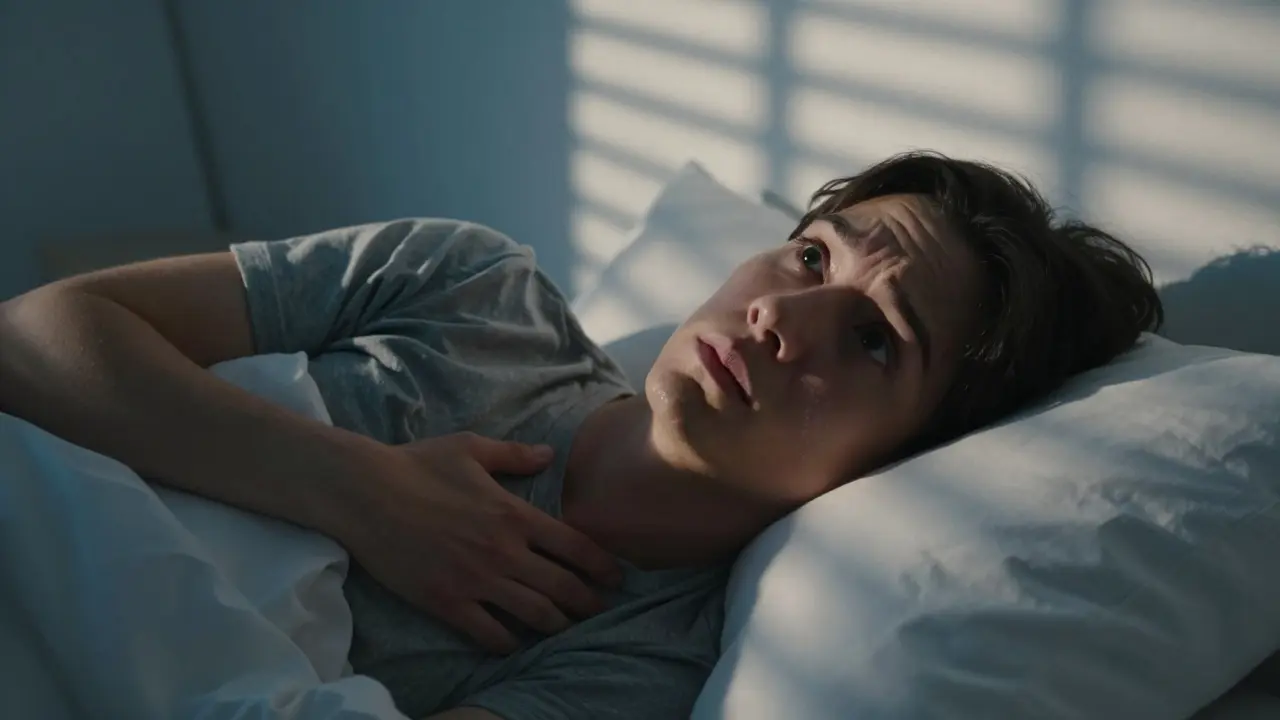
Your Brain on Red Alert
You wake up with a tight chest. Before you even get out of bed, your mind races. Is it heart failure? Did I catch something last night? You reach for your phone, type 'chest pain morning' into the search bar, and suddenly, a list of cardiac conditions appears. Your breathing gets shallower. The tightness feels worse. This loop isn't just annoying; it can be paralyzing.
If this sounds familiar, you are dealing with Health Anxiety, also known as Illness Anxiety Disorder. It is a condition where you become obsessed with the fear of having a serious medical condition, despite medical reassurance. Even when a doctor says you are fine, the doubt lingers. The good news is that this cycle is breakable. Your brain has learned a specific pattern of fear response, and we can teach it a new one.
The Mechanics of the Fear Loop
To stop the worry, you first need to see exactly how it works. Most people think health anxiety is just 'being careful,' but it behaves differently than normal caution. When someone with high health anxiety feels a headache, their brain doesn't just say, 'Oh, maybe I need water.' It jumps straight to the worst-case scenario.
This reaction involves two main parts of your brain working against each other:
- The Amygdala: This is your brain's threat detection center. In health anxiety, it acts like a smoke detector set to 'high sensitivity.' It screams fire even when there is only steam.
- The Prefrontal Cortex: This is the logical part of your brain. Under stress, it goes offline. You lose the ability to reason through facts like 'I saw my doctor yesterday, and everything was normal.'
Once the amygdala fires, your body releases stress hormones like cortisol and adrenaline. This causes physical changes-racing heart, sweating, tingling limbs. These are normal reactions to fear, but your anxious brain interprets them as proof that you are actually sick. This creates a self-fulfilling prophecy: you worry, you feel symptoms, you worry more.
| Behavior Patterns | |
|---|---|
| Normal Concern | Notice symptom → Check briefly → Accept reassurance → Move on. |
| Health Anxiety | Notice symptom → Rigidly monitor → Seek constant reassurance → Reinterpret safety signs as threats. |
The key difference lies in the reaction to reassurance. If you tell a healthy friend they aren't sick, they relax. If you tell someone with health anxiety, they might nod, but the worry returns in an hour. That inability to stick with the 'all clear' signal is what keeps you stuck.
Why You Keep Checking
We live in an era where medical information is three clicks away. For most people, this is helpful. For those struggling with health anxiety, it becomes a trap called Cyberchondria. Searching for symptoms online rarely helps because search engines prioritize worst-case scenarios to ensure you don't miss anything critical.
There is a deeper psychological driver here: uncertainty intolerance. Health anxiety thrives on ambiguity. Because our bodies change daily, we cannot promise we will never feel pain again. Your brain tries to 'solve' this unsolvable equation by obsessing. Checking your pulse, measuring blood pressure, or asking friends for help are attempts to gain 100% certainty. Since absolute certainty is impossible, the behavior loops indefinitely.
This leads to Reassurance Seeking. Every time you ask, 'Do I look pale?', and someone says 'No', you get temporary relief. But that relief is short-lived. Over time, the habit becomes so ingrained that you feel physically unsafe without asking. You become dependent on others to regulate your internal sense of safety.

Actionable Steps to Break the Cycle
Overcoming this requires changing your relationship with your own symptoms. We aren't trying to ignore legitimate health problems; we are trying to stop the false alarms. Here is a concrete plan based on clinical strategies.
1. Set Boundaries with Medical Searches
You likely have a history of late-night internet research sessions that spiral out of control. To interrupt this, implement a strict rule: No googling symptoms for a minimum of 24 hours after they appear.
Write down the symptom instead. 'Headache at 2 PM.' Then, close the laptop. Often, the urge to check is driven by panic, not logic. By delaying the action, you weaken the impulse. If you still need answers after 24 hours and the symptom persists, book a GP appointment rather than self-diagnosing. This separates actual medical needs from anxiety-driven impulses.
2. Challenge Catastrophic Thoughts
Your brain loves to jump from 'My head hurts' to 'I have a tumor.' You need to act as a lawyer for yourself. Ask your thoughts for evidence.
- Evidence For: I have a thumping headache.
- Evidence Against: My doctor checked me three months ago. Stress headaches are common. Tumor headaches usually happen in the morning and worsen with movement (yours happens after sitting).
Write this down. Physical proof of logic engages the prefrontal cortex better than thinking about it.
3. Stop the Reassurance Spiral
This is the hardest step. Stop asking family members or partners to validate your safety. While well-intentioned, their reassurance trains you to depend on external validation. Tell your partner, 'I know this scares me, but I'm going to try sitting with the feeling without checking.' They might want to help, but explain that their participation keeps the cycle alive.
4. Practice Sensory Distraction
When the alarm rings, don't fight it with logic immediately. Pull your attention out of your body. Anxiety keeps you inward-focused. Shift outward.
Try this: Name five things you can see right now. Note their colors. Name four things you can touch. Feel the texture of your pants or the coolness of the table. This technique grounds you in the present moment and reduces physiological arousal.
The Role of Professional Support
While self-help strategies work for mild cases, chronic health anxiety often benefits from professional intervention. Cognitive Behavioral Therapy (CBT) remains the gold standard for treatment. Unlike standard talk therapy, which explores the past, CBT focuses on changing current behaviors and thought patterns.
A therapist using CBT will guide you through Exposure Therapy. This might sound scary, but it essentially means deliberately facing the fears you avoid. For example, if you are afraid of your heart racing, you might run stairs to induce a rapid heartbeat, then sit down and observe that it stops. You learn through experience that your body is not fragile.
In addition to talk therapy, some individuals benefit from mindfulness practices. Mindfulness Practice teaches you to observe sensations without judgment. Instead of saying, 'My heart is beating too fast; this is dangerous,' you learn to say, 'I am noticing a sensation of rapid heartbeat.' It sounds subtle, but removing the judgment strip the sensation of its power to trigger panic.

Know When to Actually Visit the Doctor
One of the biggest fears people have when treating health anxiety is accidentally missing a real diagnosis. It is crucial to distinguish between anxiety symptoms and genuine warning signs.
You should see a doctor if:
- Symptoms persist regardless of stress levels.
- Physical changes occur (e.g., a new lump that doesn't go away).
- Fewer symptoms respond to lifestyle changes (rest, hydration).
However, limit these visits. Once your doctor gives an 'all clear' result and no treatment plan is needed, respect that boundary. Revisiting the doctor every week for the same symptom reinforces the idea that something is wrong. Trust the data points already collected.
Moving Forward
Healing from health anxiety isn't about becoming a robot who never notices pain. It's about learning that discomfort is a normal part of being human. Your body sends signals all day; most are routine maintenance updates, not emergency alerts. By slowing down your reaction, limiting checks, and trusting your resilience, you reclaim control. The goal isn't a life without symptoms; it's a life where symptoms don't hijack your day.
Is health anxiety a permanent condition?
No, health anxiety is treatable. With proper strategies like CBT and lifestyle adjustments, most people see significant improvement. It may take time to unlearn habits, but the condition does not define your future.
Can meditation help with health anxiety?
Yes, mindfulness meditation helps reduce physiological reactivity. However, for severe cases, combine meditation with behavioral changes. Meditation alone won't fix the compulsion to check symptoms without addressing the thought patterns.
How do I stop myself from searching symptoms online?
Set a hard limit, such as a 48-hour waiting period before searching. Write the symptom down and wait. Replace the urge with a physical activity like walking. Over time, the compulsion weakens as you break the immediate reward loop.
Is health anxiety related to OCD?
They share similarities, particularly the obsession-compulsion cycle (fear followed by checking). Some specialists classify health anxiety under the obsessive-compulsive spectrum, while others view it as an anxiety disorder subtype. Treatments overlap significantly.
What medications help with health anxiety?
Antidepressants, particularly SSRIs, are often prescribed alongside therapy. They help balance serotonin levels in the brain, reducing overall anxiety intensity. Always consult a psychiatrist to find the right fit for your specific needs.