
Ever notice how some of the most powerful songs, paintings, or stories come from places of deep pain? It’s not a coincidence. The link between mental health and creativity isn’t just anecdotal-it’s backed by decades of research, lived experience, and real-world patterns. People struggling with depression, anxiety, or bipolar disorder don’t just create in spite of their struggles-they often create because of them. But this connection isn’t romantic. It’s complex, messy, and sometimes dangerous. Understanding it can help you protect your mind while letting your creativity breathe.
When Sadness Fuels the Brushstroke
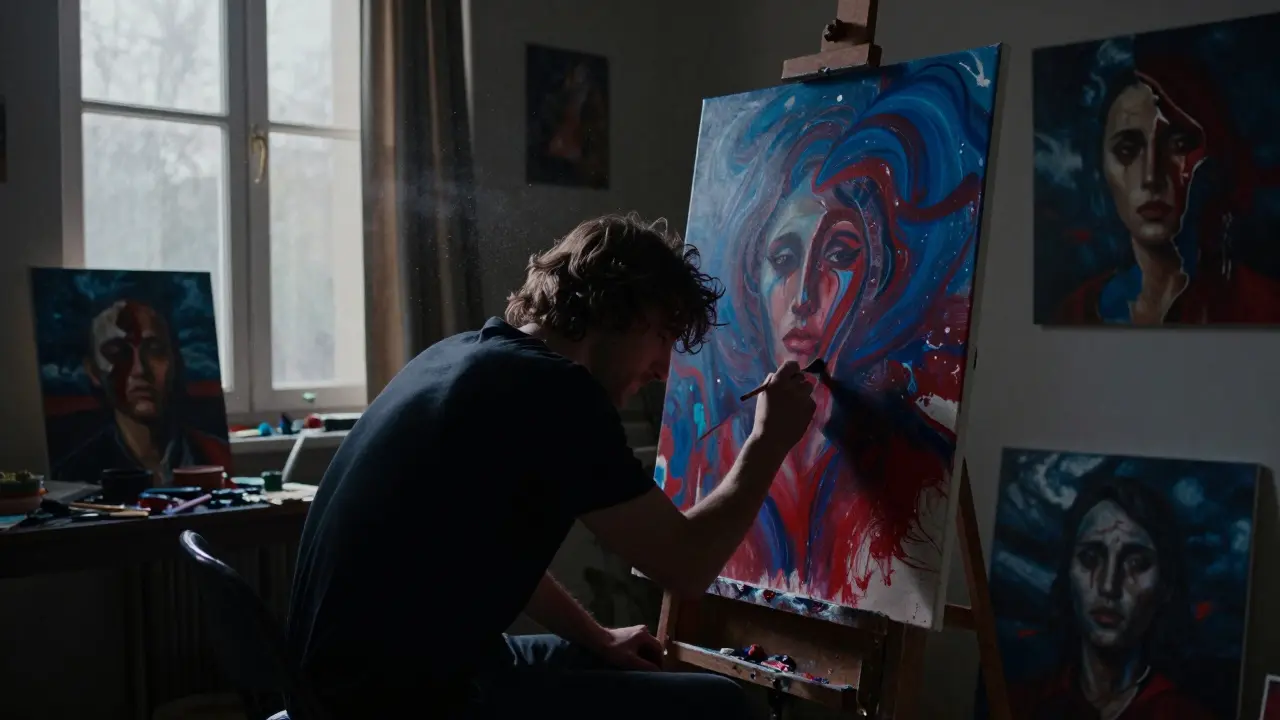
Van Gogh painted over 900 works in just ten years. He was hospitalized multiple times, struggled with hallucinations, and cut off his own ear. Frida Kahlo turned her chronic pain and emotional trauma into vivid, surreal self-portraits that still stun viewers today. These aren’t outliers. Studies from the University of Kentucky and the Karolinska Institute show that people with mood disorders are significantly more likely to work in creative fields-writing, music, visual arts, dance-than the general population.
Why? Depression and anxiety don’t just drain energy-they sharpen perception. When your mind is stuck in a loop of rumination, you notice details others miss: the way light falls on a cracked sidewalk, the exact tone of someone’s sigh, the silence between heartbeats. That hyper-awareness becomes raw material for art. Creative work gives structure to chaos. It turns inner noise into something you can hold, shape, and share.
The Double-Edged Sword of Mania
It’s not just sadness that fuels creativity. Mania-the elevated, energized state seen in bipolar disorder-can be a creative engine. During manic episodes, people report racing thoughts, reduced need for sleep, and an overwhelming drive to produce. One musician described it as “a floodgate opening-melodies poured out like water I couldn’t stop.”
But this isn’t sustainable. Without treatment, mania leads to burnout, poor decisions, and sometimes hospitalization. A 2023 longitudinal study tracking 12,000 artists found that those who managed their bipolar symptoms with therapy and medication didn’t lose their creative edge-they became more consistent. Their work improved in quality because they weren’t cycling between collapse and explosion.
The myth that you need to be broken to be brilliant is dangerous. Creativity doesn’t require suffering. It thrives on stability, rest, and emotional regulation. The goal isn’t to hold onto pain-it’s to learn how to channel it without letting it destroy you.
How Creativity Heals the Mind
It’s not just that mental health influences creativity. Creativity also heals mental health. Art therapy isn’t just a trendy concept-it’s an evidence-based practice used in hospitals, clinics, and trauma centers worldwide. When words fail, drawing, writing, or dancing can express what the mind can’t name.
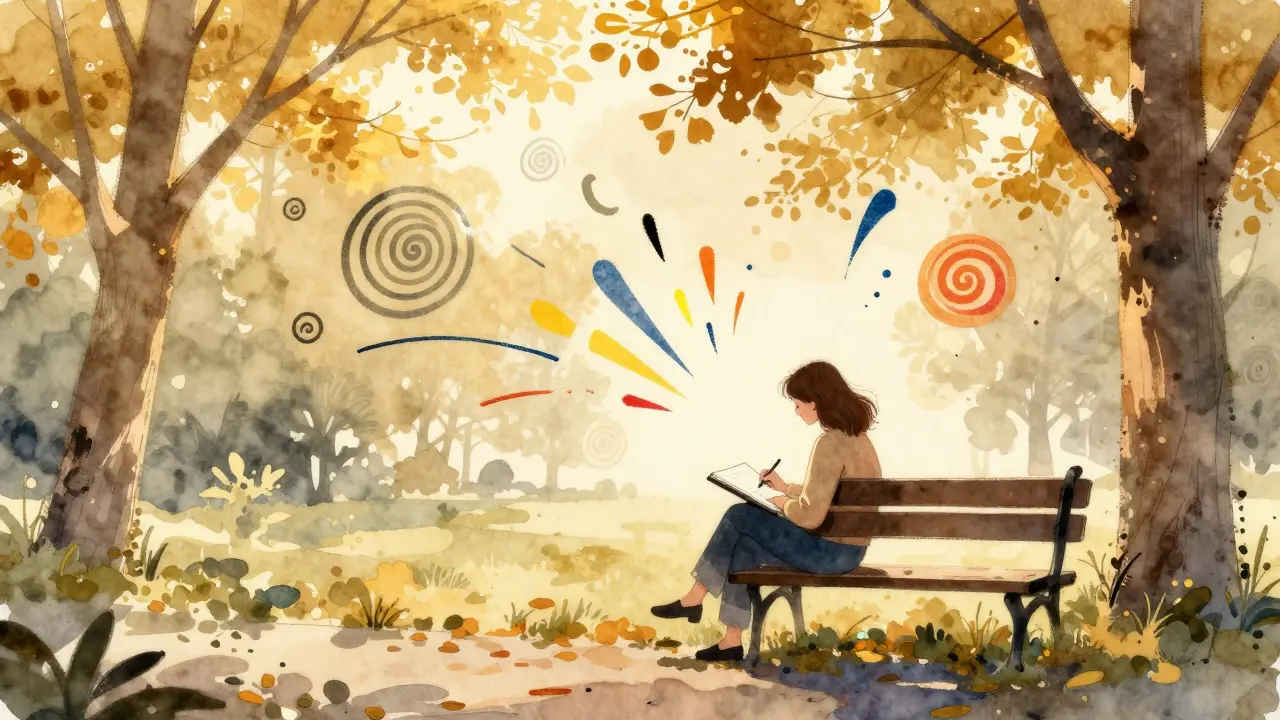
One woman in Johannesburg, who survived domestic abuse, started painting abstract shapes every night after her children went to bed. She didn’t know what they meant at first. Over months, she noticed recurring patterns: spirals, broken lines, bursts of red. Her therapist helped her see they mirrored her emotional state. Painting became her way of tracking her healing-not just as art, but as a diagnostic tool.
Neuroscience backs this up. Creating art activates the brain’s reward system, releasing dopamine. It lowers cortisol, the stress hormone. Journaling for just 15 minutes a day has been shown in multiple studies to reduce symptoms of anxiety and depression. It doesn’t matter if you’re “good” at it. The act of making something-any kind of something-is a form of self-compassion.
The Hidden Cost of Creative Burnout
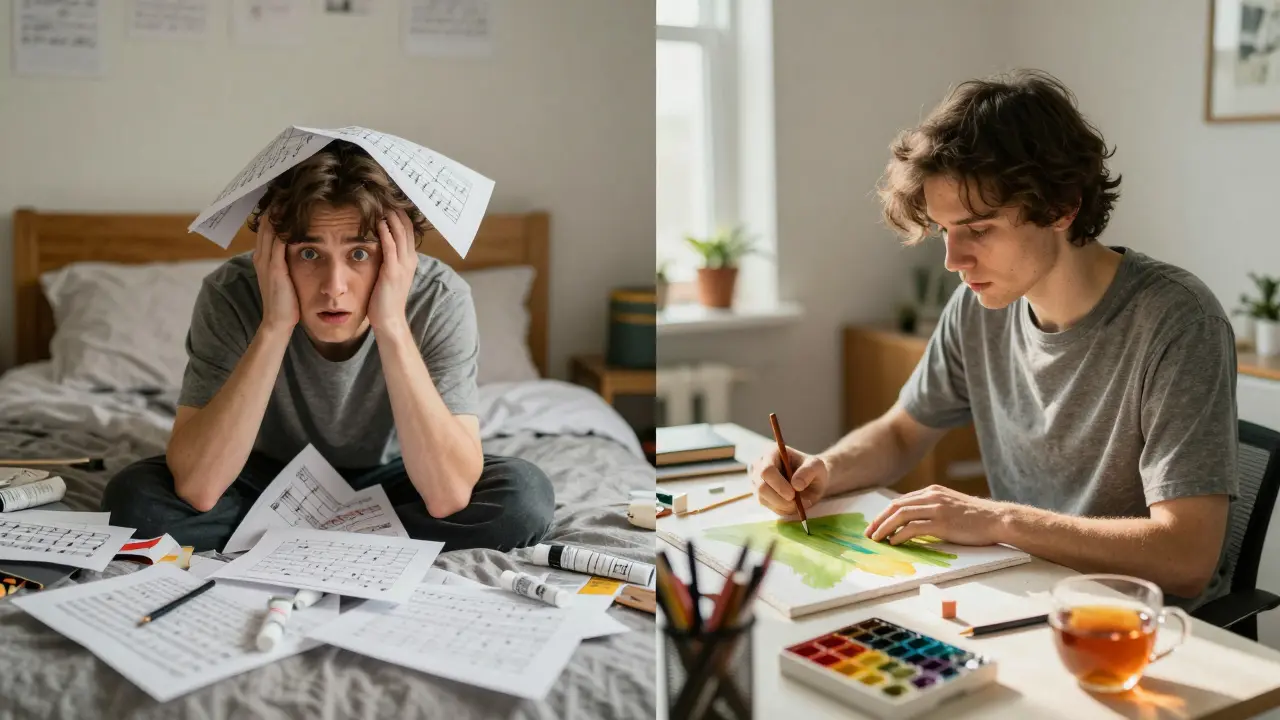
Many creative people believe they must suffer to be authentic. They push through insomnia, skip meals, isolate themselves, and ignore panic attacks because “this is what artists do.” But burnout doesn’t make you more profound-it makes you exhausted. And exhaustion doesn’t lead to genius. It leads to silence.
Look at the data: writers who take regular breaks, sleep seven hours, and have supportive routines produce more finished work than those who live on caffeine and crisis. A 2024 survey of 500 professional creatives in South Africa found that those who set boundaries-like no work after 8 p.m. or mandatory weekend digital detoxes-reported higher satisfaction, fewer depressive episodes, and more consistent output.
Protecting your mental health isn’t a betrayal of your art. It’s the foundation of your longevity as a creator. You can’t pour from an empty cup. And if your cup is cracked, no amount of inspiration will fix it.
Practical Ways to Protect Your Mind While Creating
Here’s what works, based on real people who’ve been there:
- Keep a mood and output log. Track your energy levels, sleep, and how much you create each day. You’ll start seeing patterns-like how you write best after a good night’s rest, or how anxiety makes you over-edit everything.
- Create a ritual, not a pressure. Instead of saying, “I must write 1,000 words today,” try, “I’ll sit with my notebook for 20 minutes.” Let the work come, but don’t force it.
- Build a support network. Find one person-a friend, therapist, or fellow artist-who knows your struggles and doesn’t judge your highs or lows. Talk to them weekly.
- Use creativity as a tool, not a crutch. If you’re using art to avoid dealing with trauma, it’ll backfire. Therapy helps you process the pain. Art helps you express it. They’re partners, not substitutes.
- Set non-negotiable rest times. No emails. No drafts. No projects. Just sleep, walk, or sit in silence. Your brain needs downtime to integrate emotions and spark new ideas.
When Creativity Stops Feeling Like Healing
There’s a moment when the thing you once turned to for relief starts to feel like another burden. You dread sitting down to paint. You panic when you don’t write. You feel guilty for not being “inspired.” That’s a red flag.
It means your creativity has become tied to your self-worth. You’re no longer creating because it feels good-you’re creating because you think you have to. That’s when the cycle becomes toxic.
At that point, the best thing you can do is step away. Not forever. Just for a while. Let yourself be bored. Watch a movie. Walk without your phone. Let your mind wander. Often, the ideas you’re chasing will find you again-quietly, gently-when you stop chasing them.
You Don’t Have to Choose Between Sanity and Art
The idea that mental illness and creativity are inseparable is a myth that harms more than it helps. Yes, many brilliant artists struggled. But many more didn’t. And those who did-when they got help-created their best work.
Healing isn’t the end of your creativity. It’s the beginning of a deeper, more sustainable one. You don’t need to be broken to make something beautiful. You just need to be human.
Start small. Today, try this: spend ten minutes doing something creative-not because you have to, but because you want to. Scribble. Hum. Fold paper into a bird. Let it be messy. Let it be nothing. That’s where the real magic begins.